

Survivor Encyclopedia

Vera Federman - Hungary
-

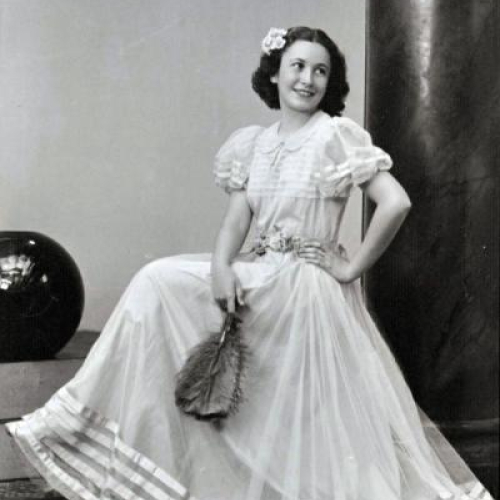
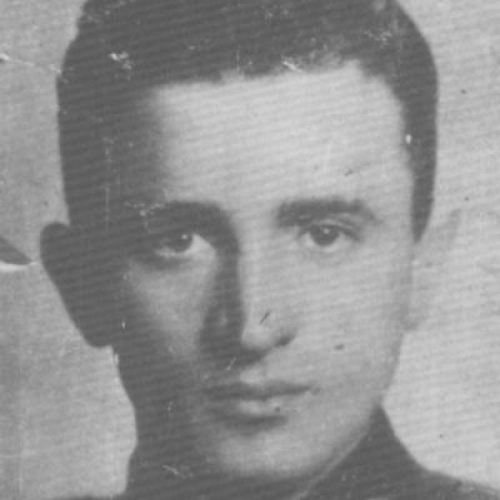
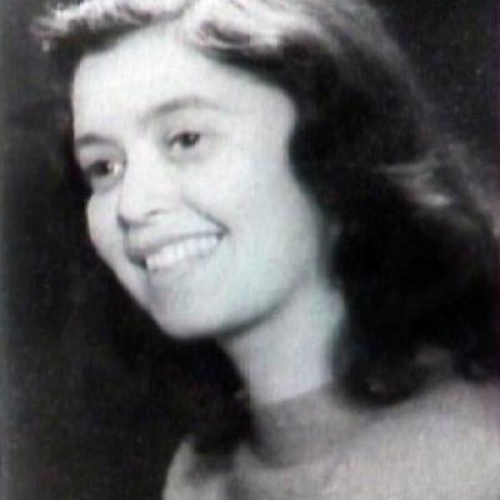
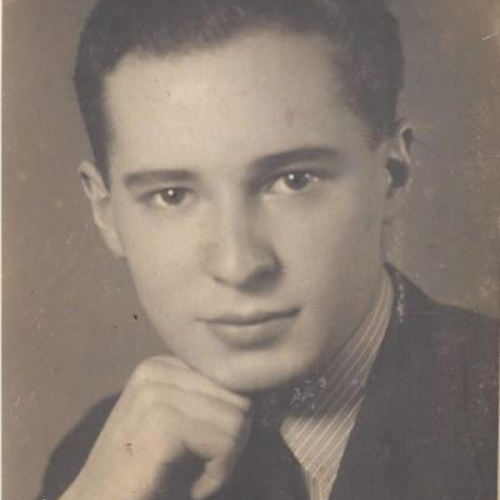
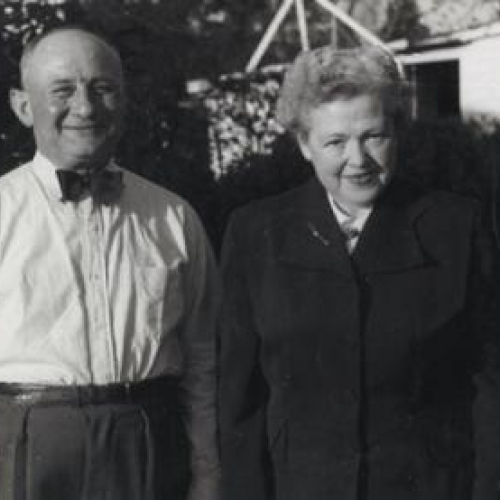
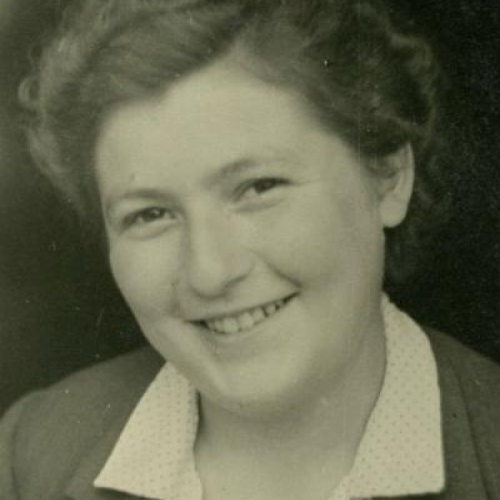
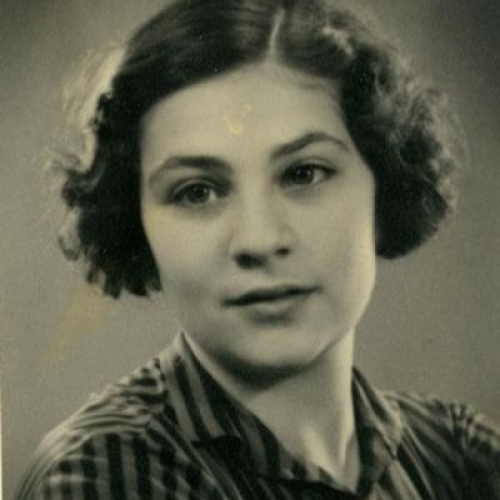
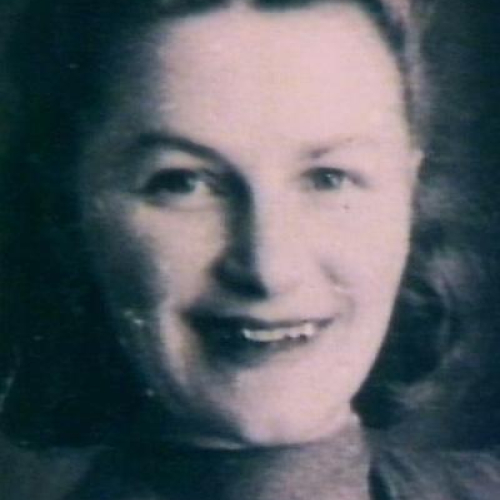
Vera Federman age 21, 1945 "One day, they lined us up and we had to go past Mengele naked, with our shoes in our hand… He said to me, 'You won’t do. You’re too thin. Go that way,' which was left. I didn’t go all the way there…I spoke German very well, and I said, 'Oh, but I’m very strong, I can work.' A German guard was standing next to me. She leaned to him, and she said, 'Lass das kleine gehen [Let the little one go],' and he did. He did." - Vera Federman
Vera (Frank) Federman was born in Debrecen, Hungary in June 1924. The Nazis invaded Hungary in March 1944, and in June, on Vera’s 20th birthday, Vera and her family were deported to Auschwitz and separated. Vera was in Auschwitz for six weeks before the Nazis sent her to a munitions factory in Allendorf, a subcamp of Buchenwald. Vera was liberated by the American forces on March 28, 1945, and upon returning to Debrecen, she discovered that only she and her beloved cousin Marika had survived. Their lives shattered, they found refuge in a DP Camp in Austria.
In May 1946, the Hillel Foundation for Jewish Campus Life offered scholarships for young, educated, English-speaking survivors to enroll in American colleges. She and Marika both qualified, and left Europe for the University of Washington in December 1947. Soon after moving to Seattle, Vera met Marvin Federman, a US Army veteran who had served in Europe. They married in 1949 and had two children (Murray and Judy) and numerous grandchildren and great-grandchildren. Vera shared her story as a member of the Holocaust Center for Humanity's Speakers Bureau. She passed away in 2017.
1924-2017
- More About This Survivor:
Transcripts for Video Clips — Vera Federman
Full Testimony (2009, 38:05)
-


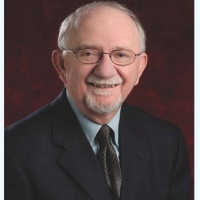
Josh Gortler - Poland
-
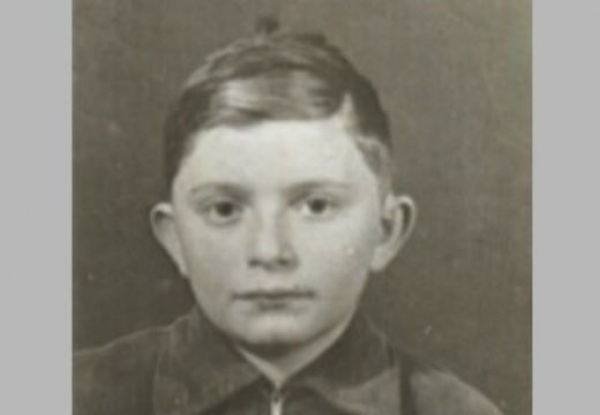
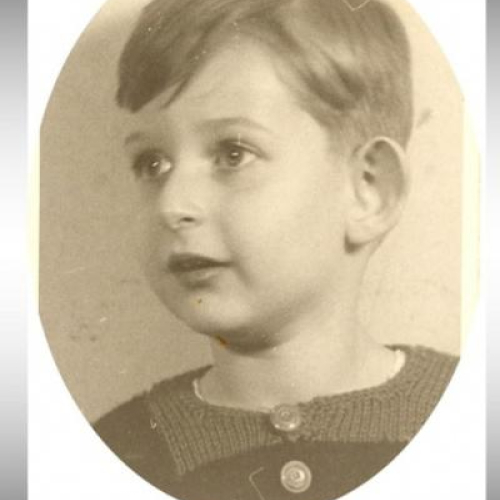
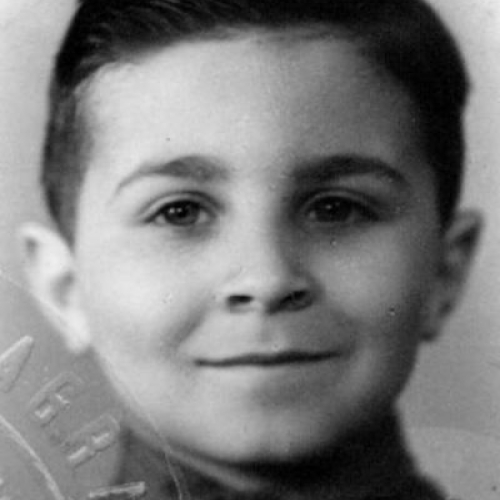
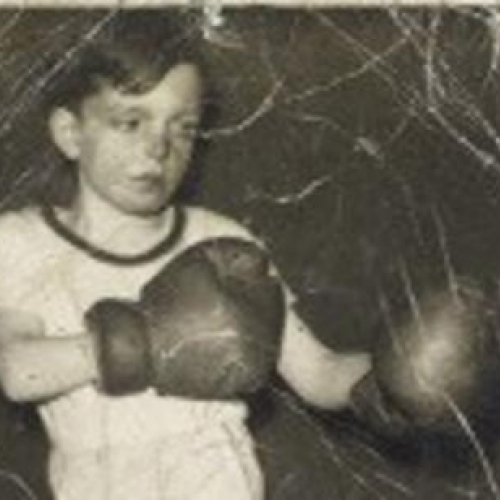
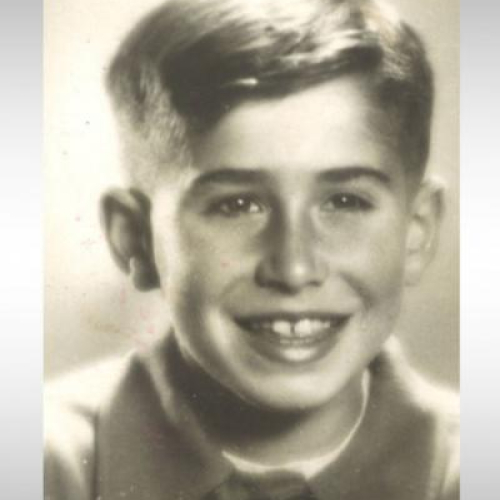
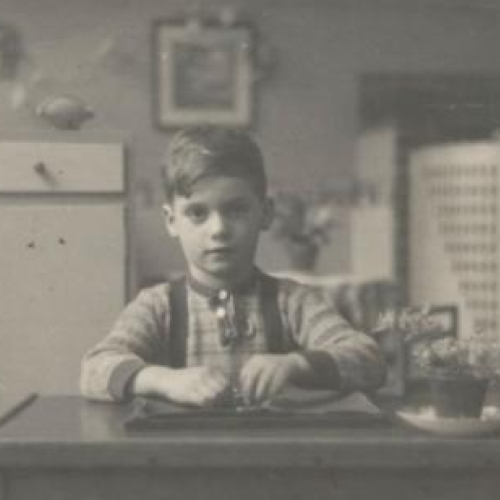
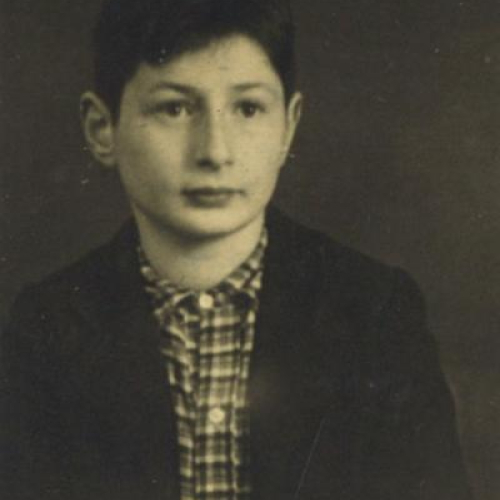
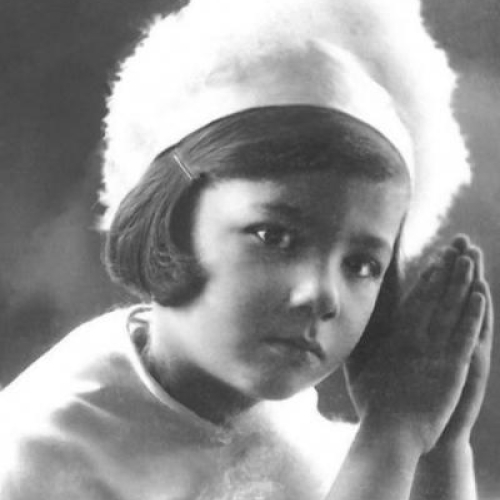
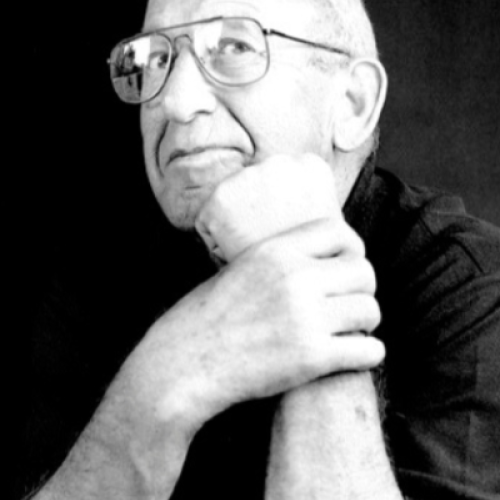
Josh Gortler "There’s a time to think, and there’s a time to talk. And I feel that now is the time to talk and retell these stories for the future generations to come. Because, if we don’t learn from the past, we will make the same mistakes in the future." - Josh Gortler
Josh was born in Tomaszow, Poland in 1936, where his family had lived for almost a century. When the Nazis invaded Poland in 1939, his family was incarcerated in the Ghetto. They made their way to Siberia and Uzbekistan, where life was incredibly harsh but not as dangerous for Jews. After liberation, Josh and his family found refuge in a displaced persons (DP) camp in Berlin.
In 1951, the Gortlers came to America, and Josh arrived with no formal education or English skills. He persevered, graduating from a Jewish high school before earning Bachelor’s and Master's degrees in Social Work. Josh then moved to Seattle and worked at the Kline Galland Jewish nursing home for almost 50 years. He began telling his story when his grandchildren asked what happened to him during the Holocaust, and he is now an active member of the Holocaust Center for Humanity's Speakers Bureau and Board of Directors. In 2014 Josh was honored by Yeshiva University with a doctoral degree for his leadership in elder care in Seattle and on a national level.
1936-
- More About This Survivor:
Transcripts for Video Clips -- Josh Gortler
Full Testimony -- Josh Gortler (2009, 49:44)
Traverse Talks Podcast with Josh Gortler, Episode 20 -- Northwest Public Broadcasting (50:19)
People who Survived the War (0:53)
Displaced Persons Camp (1:39)
Oral History Audio and Transcript -- Washington State Jewish Historical Society/University of Washington Libraries Special Collections
-
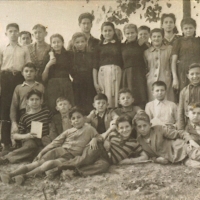
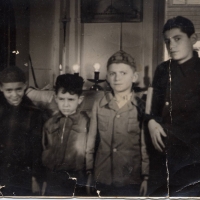
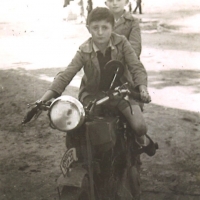
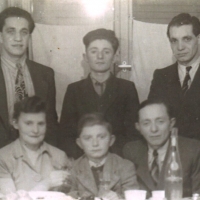
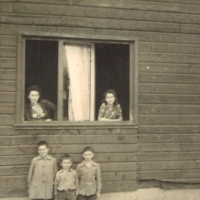
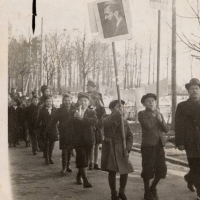
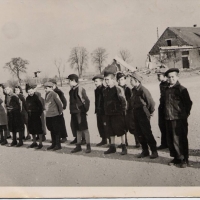
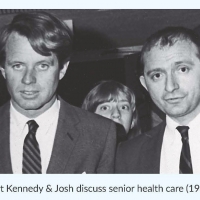
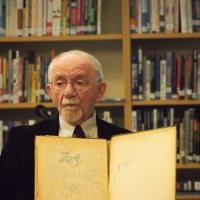
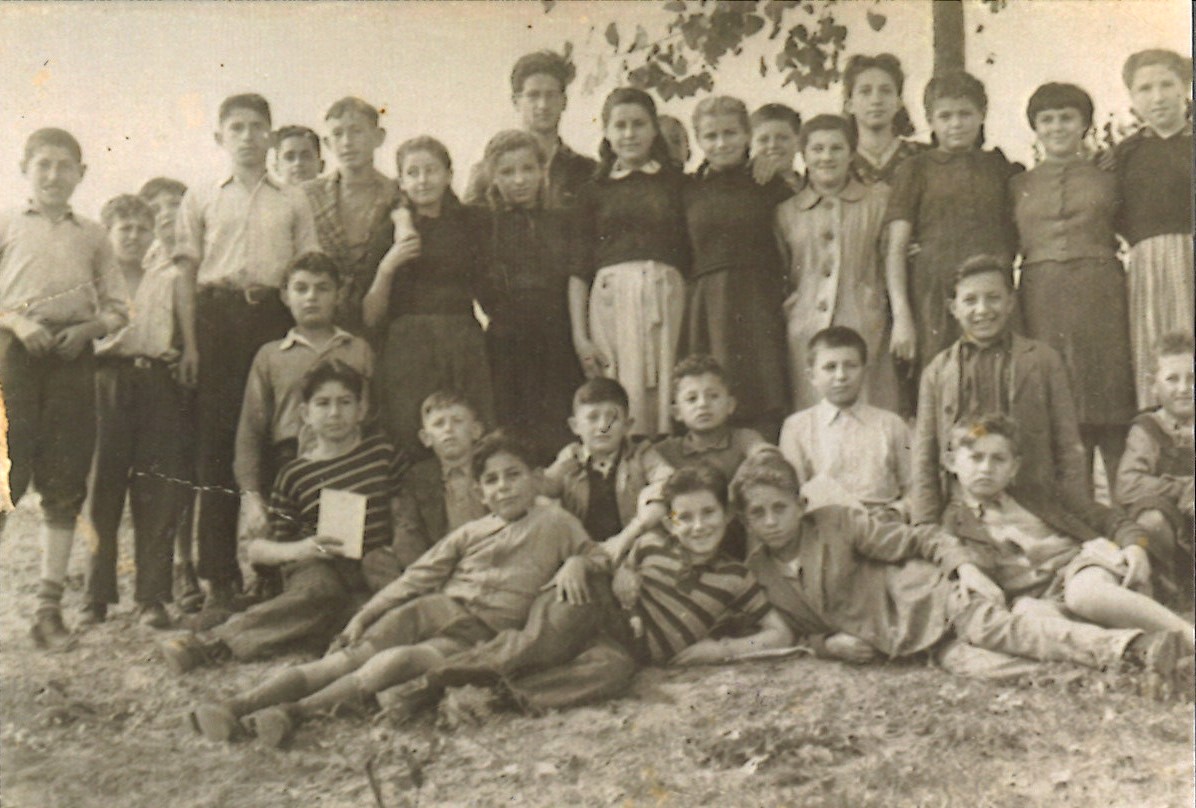
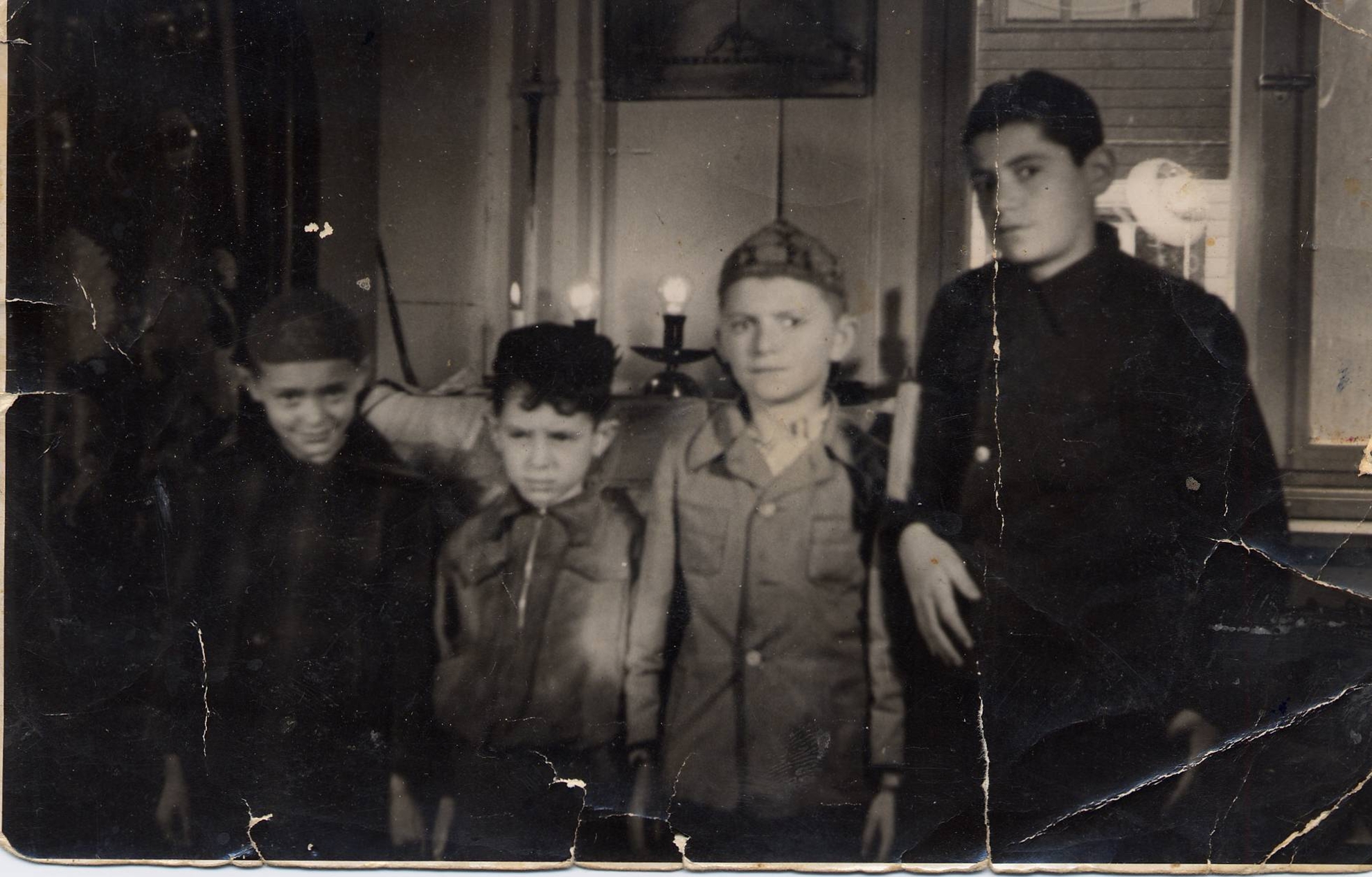
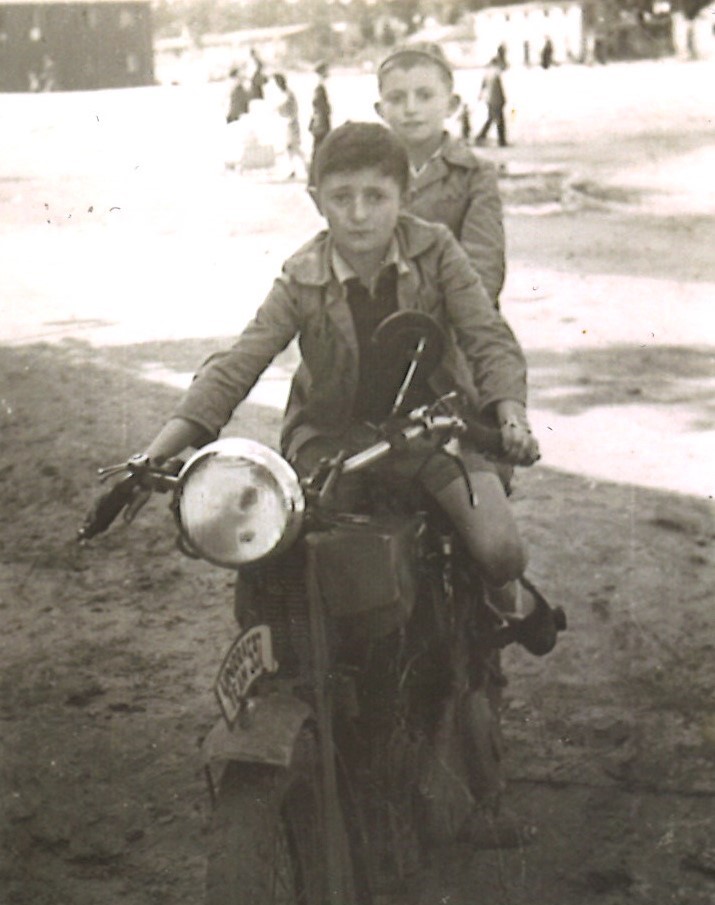
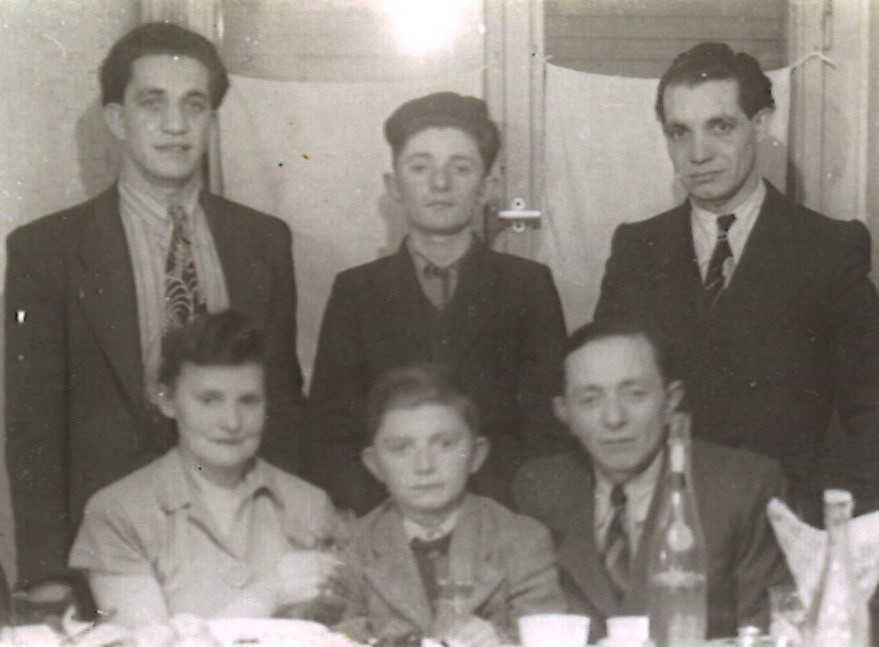
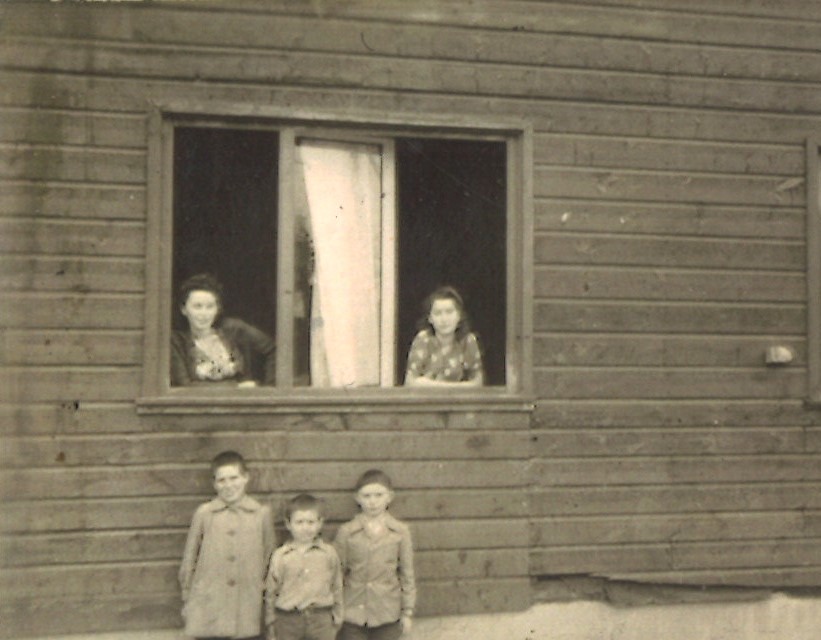
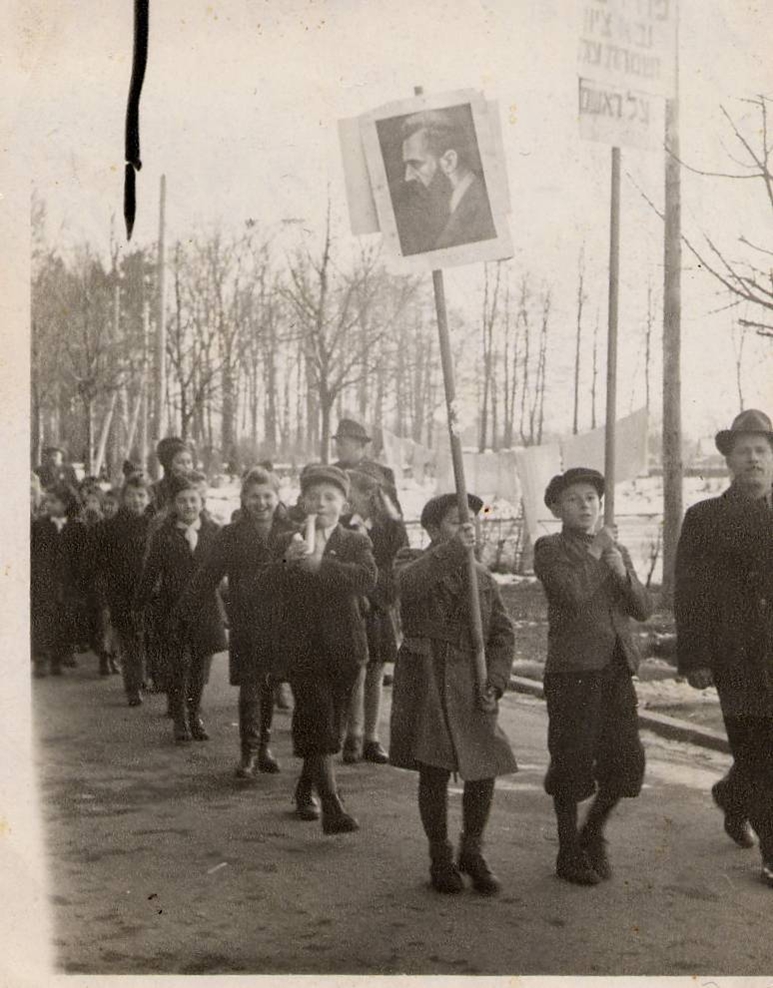
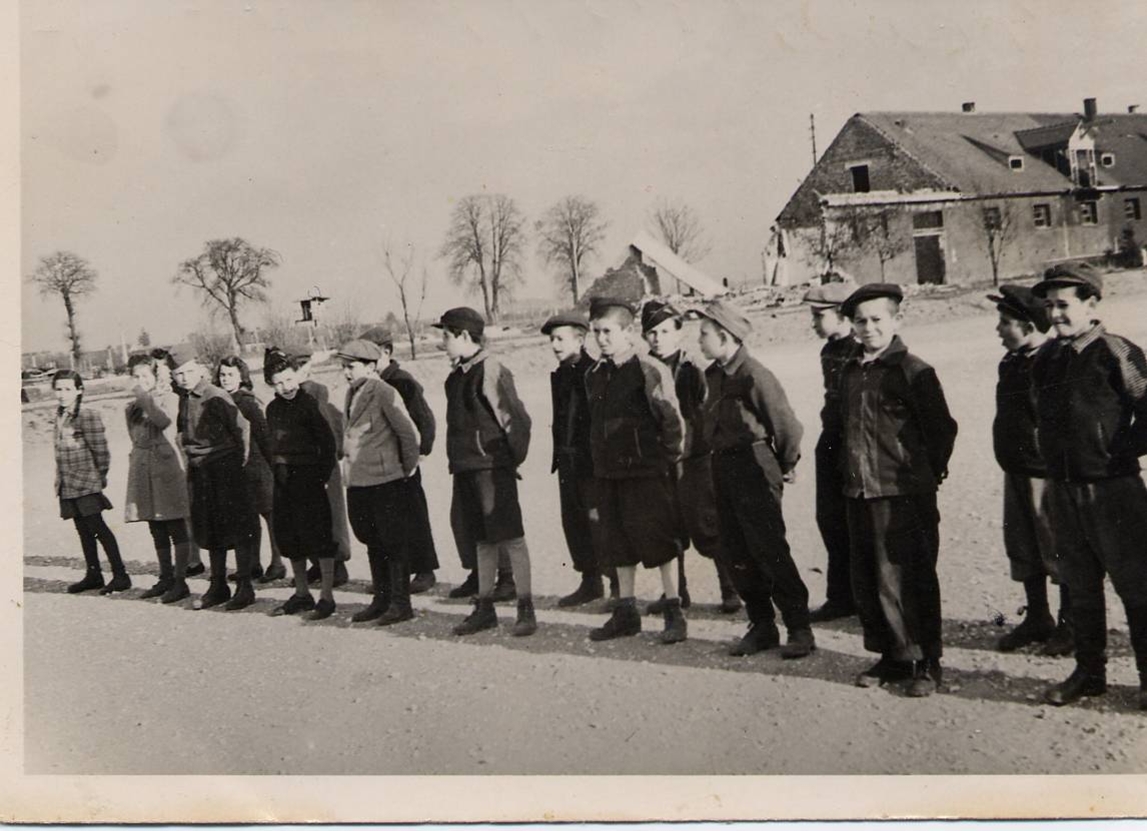
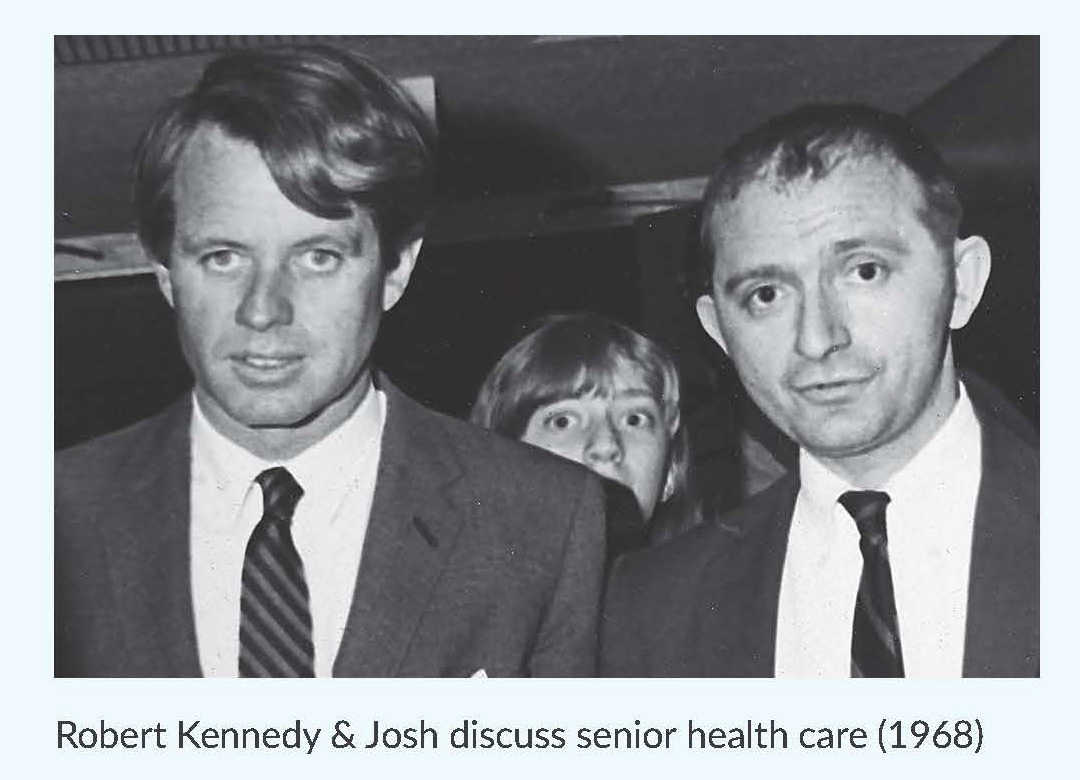
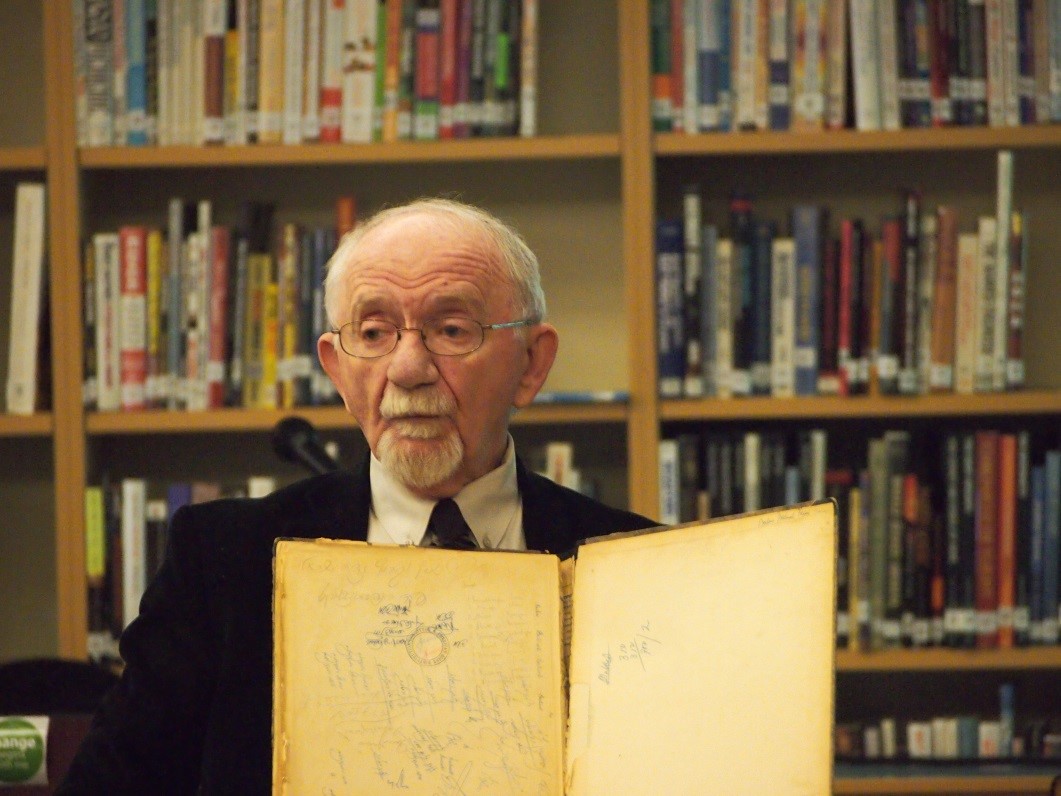
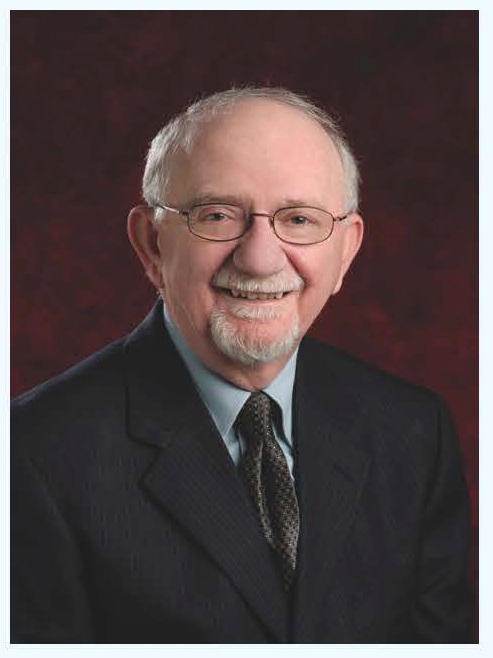
When the Nazis invaded Poland in 1939, his family was incarcerated in the Ghetto.

Stella DeLeon - Rhodes
-
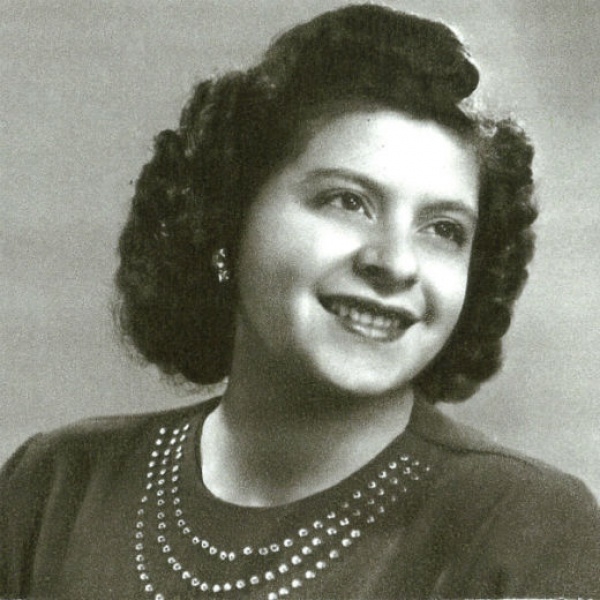
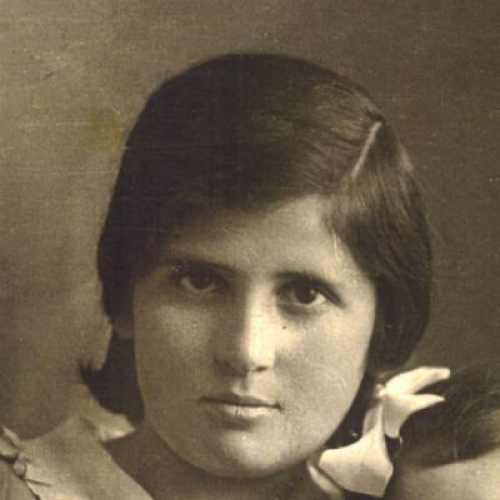
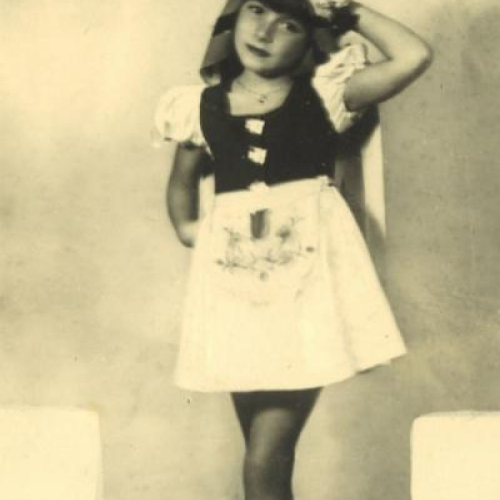
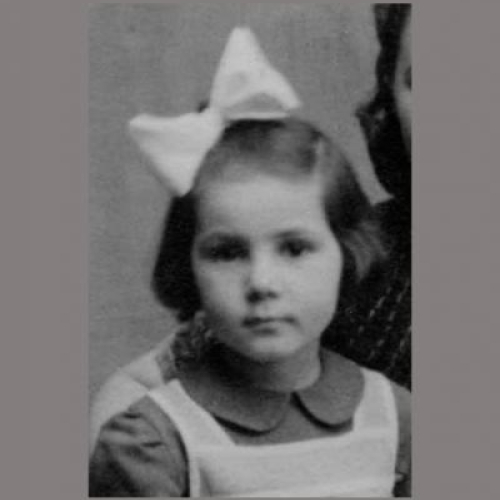
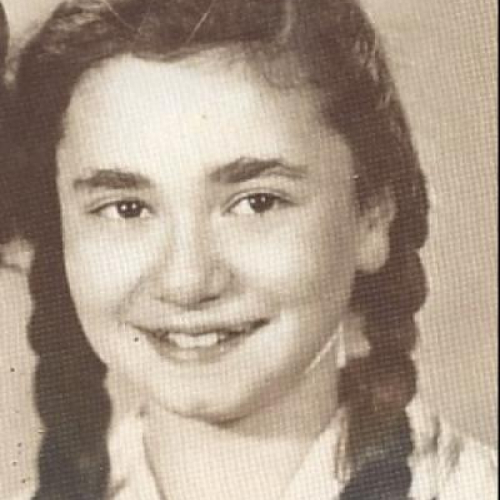
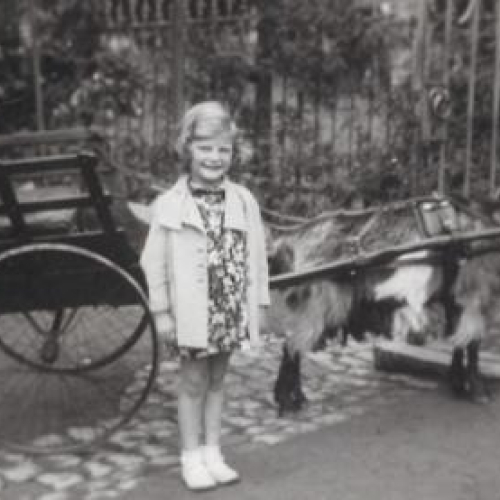
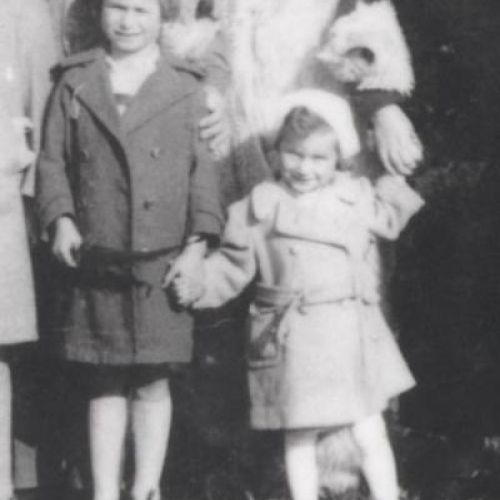
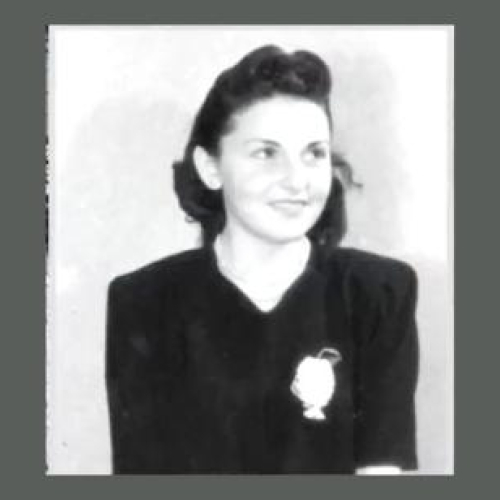
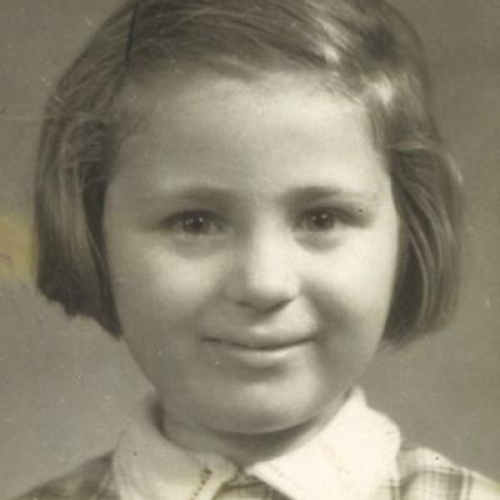
Stella DeLeon 1948 USA “For all the time I was in the camps, in Auschwitz and everything, I always had the feeling, ‘I’m going to survive. I’m going to get out of here.’ But by the middle of April [1945], I figured, no way I can survive and get out, especially after my little sister died...I said, out loud, ‘[There]’s no God. God won’t let us suffer like this.’ And, believe it or not, a miracle happened. That afternoon, the camp was liberated.” - Stella DeLeon
Stella was born to a large Sephardic family on the island of Rhodes in 1926. In July 1944, the Nazis deported 1,700 Jews from Rhodes to Auschwitz, including Stella, her seven siblings, and their parents. From their 2,000-year-old Jewish community, only 151 Jews survived, including Stella and her sister Flora. Tragically, their sister Janetta died of typhoid just three days before liberation. On April 15, 1945, Stella and Flora were liberated by British soldiers in the Bergen-Belsen concentration camp and then made their way to Rome.
In December 1945, a cousin in Los Angeles found the girls' names on a list of survivors and sponsored them to come to America in 1947. Stella lived in Los Angeles for two years before meeting her future husband, Ralph DeLeon while on a trip to Seattle. They were married within six weeks, and Seattle became her home. Stella was a member of the Ezra Bessaroth Sephardic synagogue and was a part of the Holocaust Center for Humanity's Speakers Bureau. Stella and Ralph had two children, whom they named Rochelle and Jack in memory of Stella's beloved siblings. Stella passed away in 2001.
1926-2001
- More About This Survivor:
Transcripts for Video Clips — Stella DeLeon
Full Testimony (1995, 2:09:26)
Island of Rhodes (0:43)
Oral History Audio and Transcript - Washington State Jewish Historical Society/University of Washington Libraries Special Collections
-
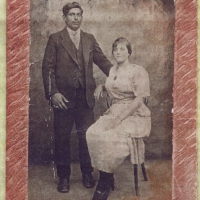
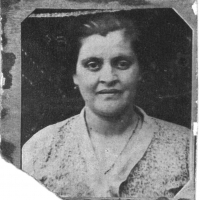
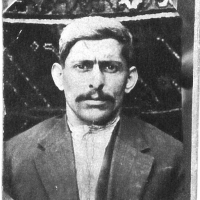
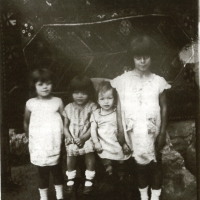
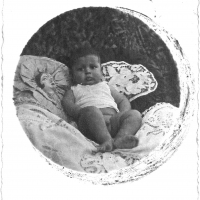
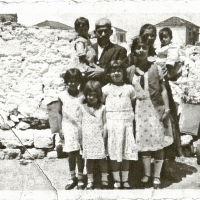
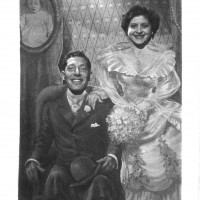
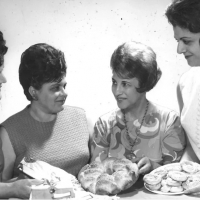
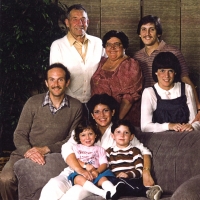
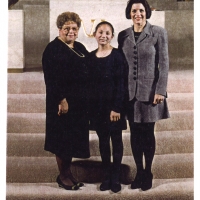
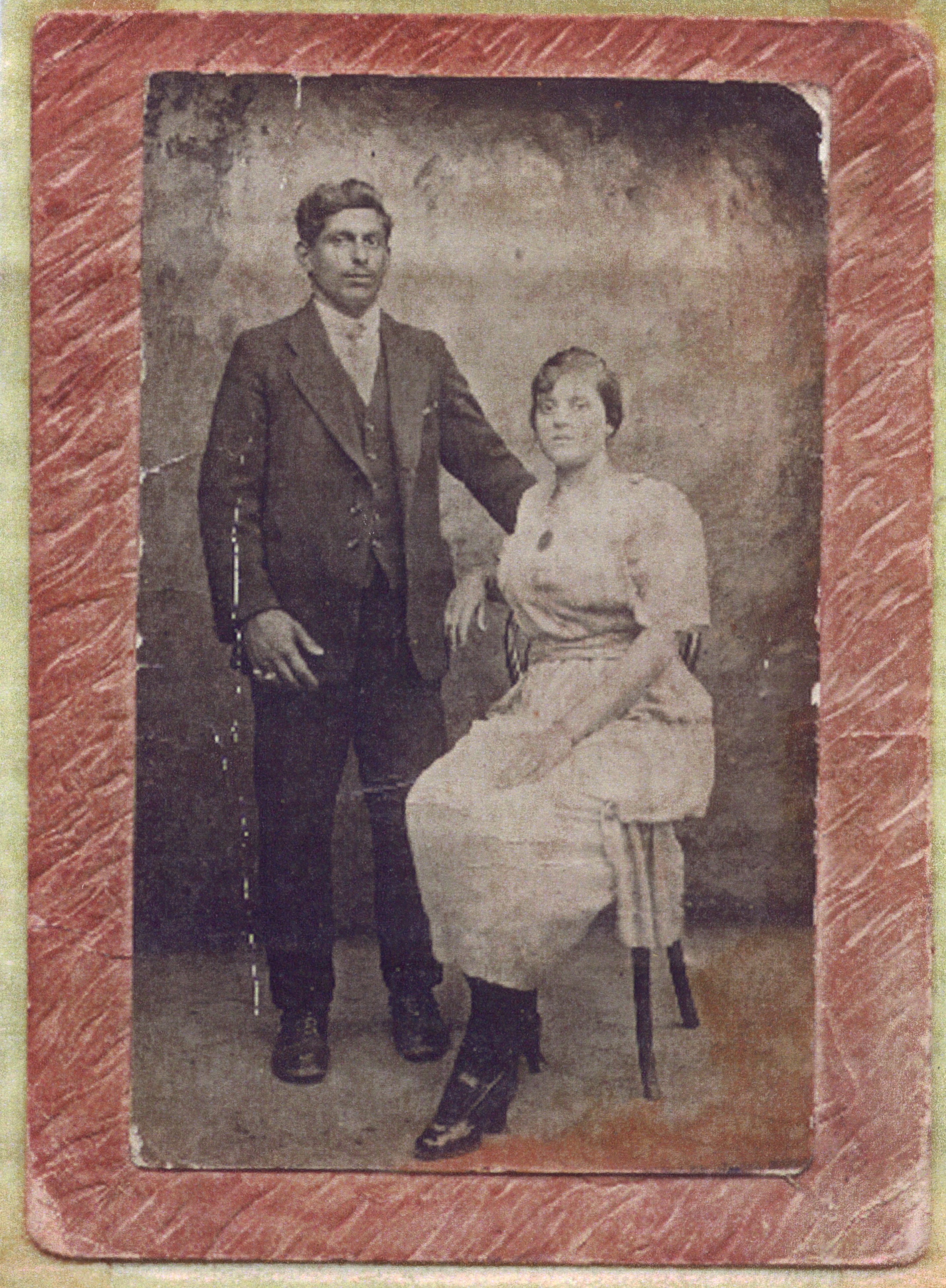
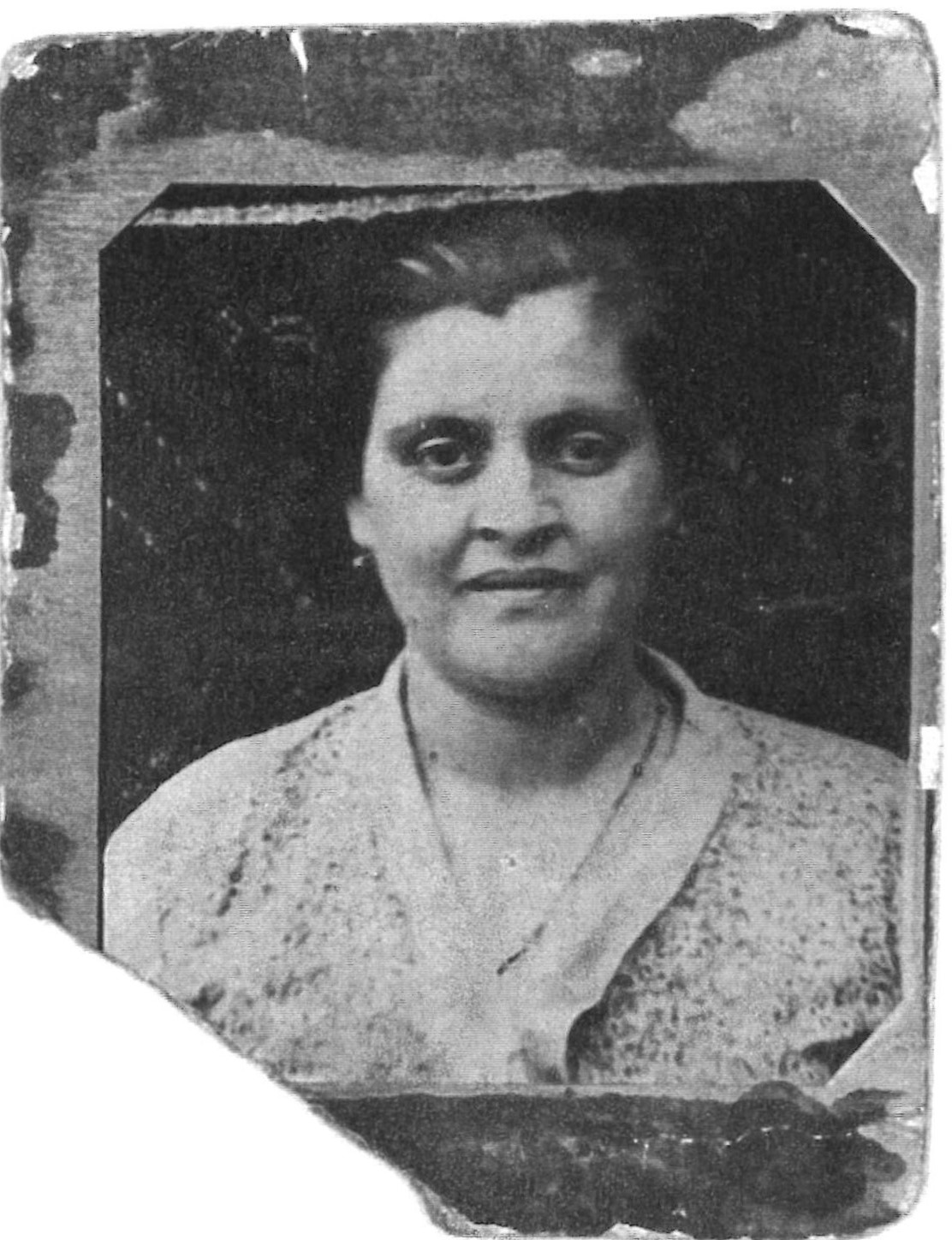
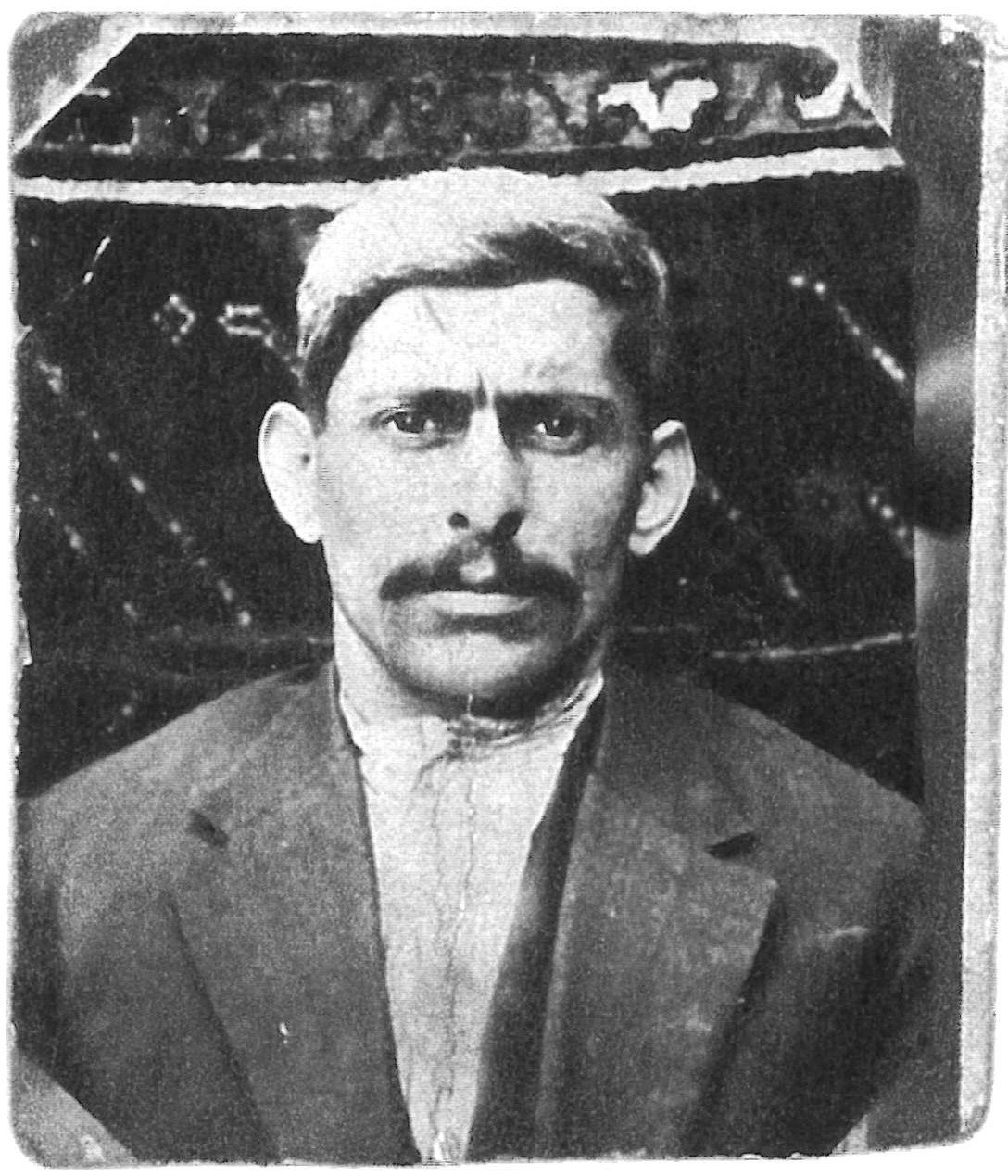
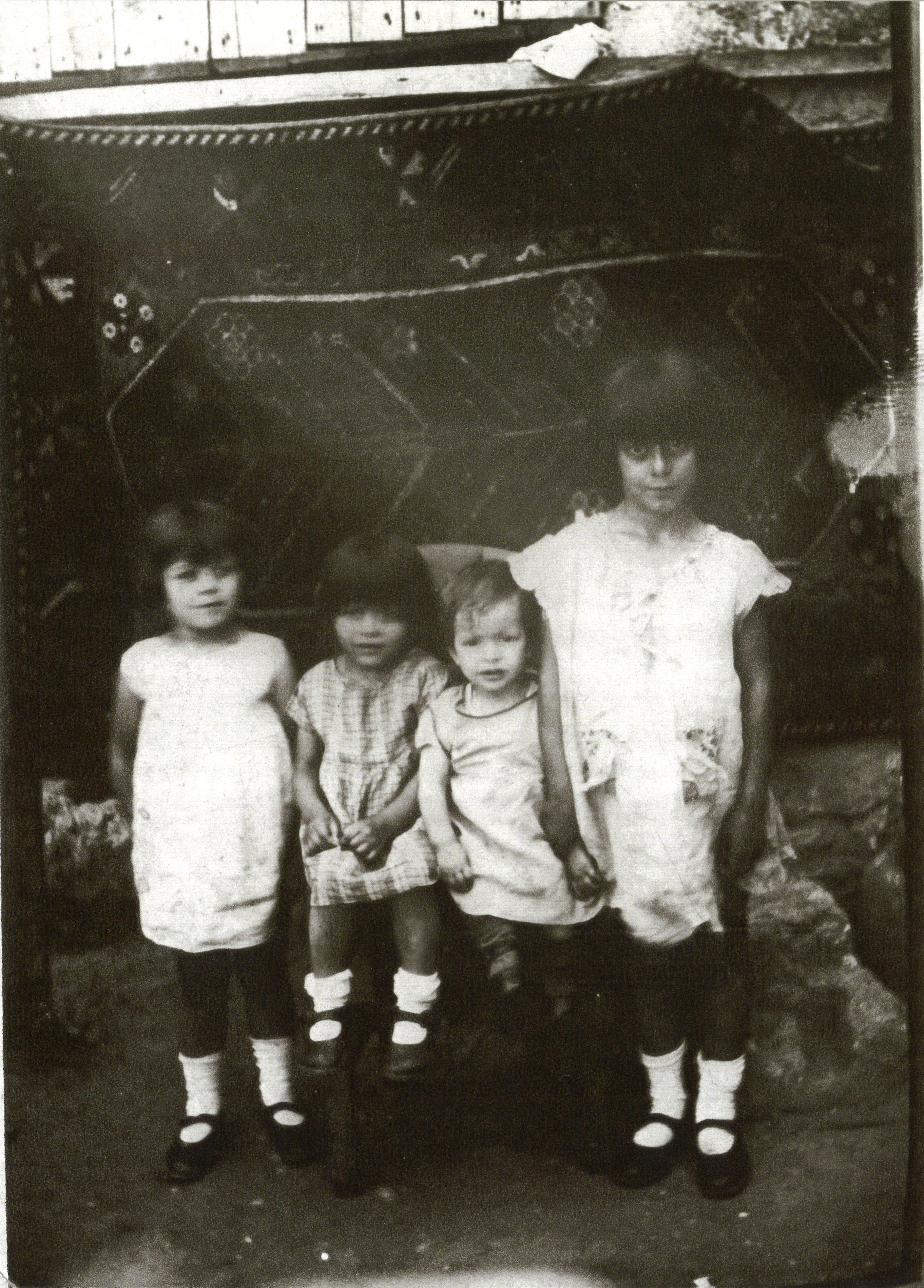
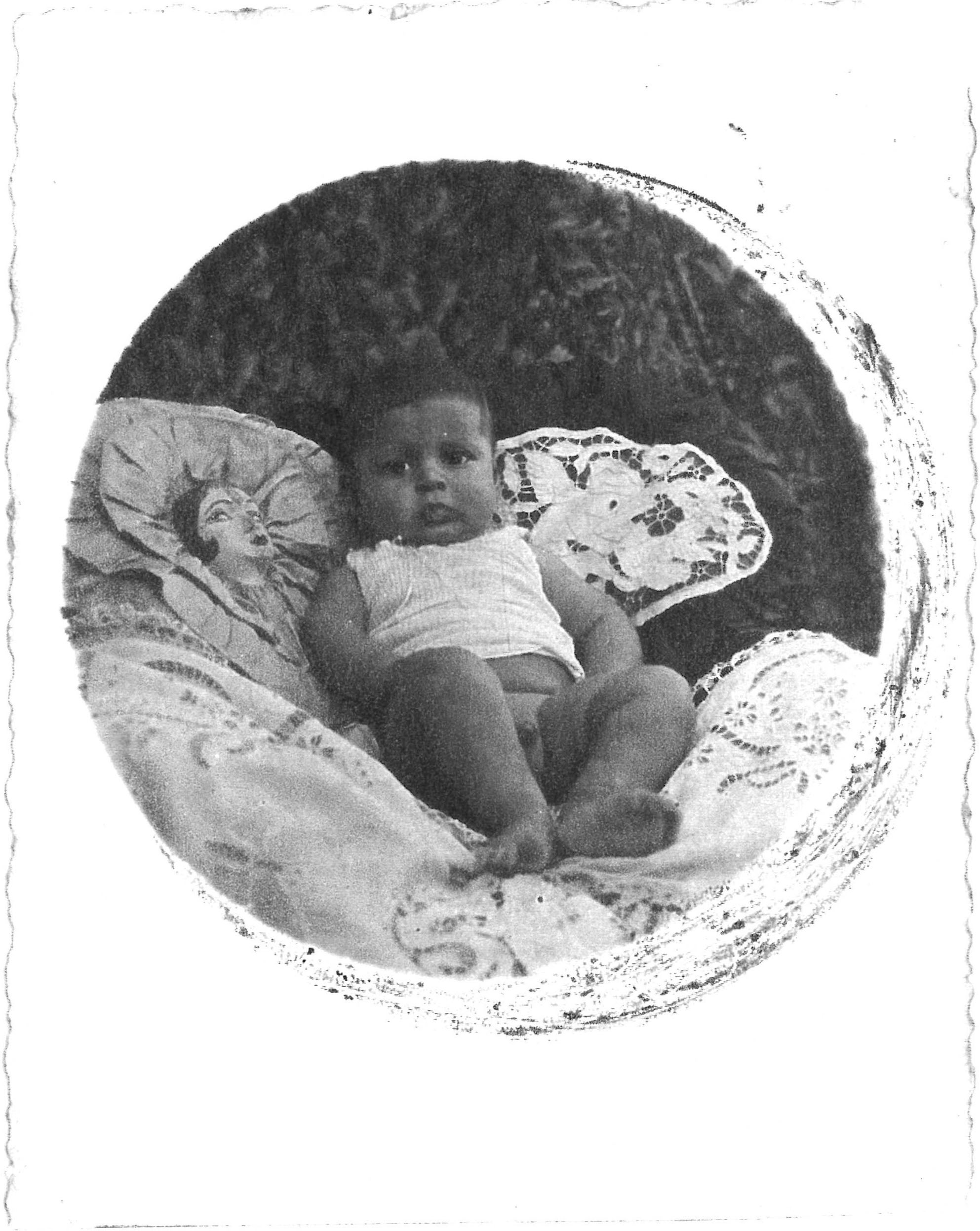
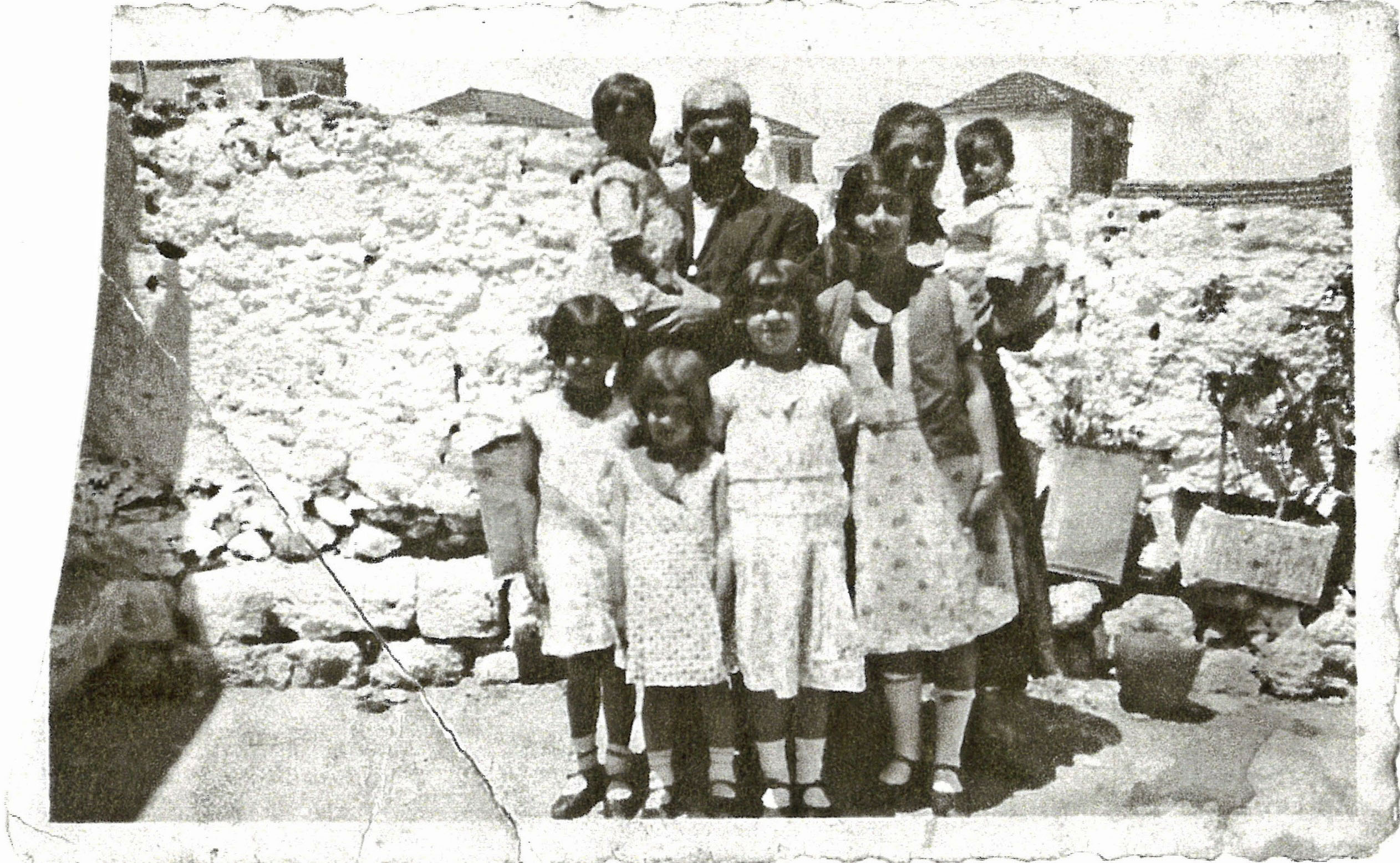
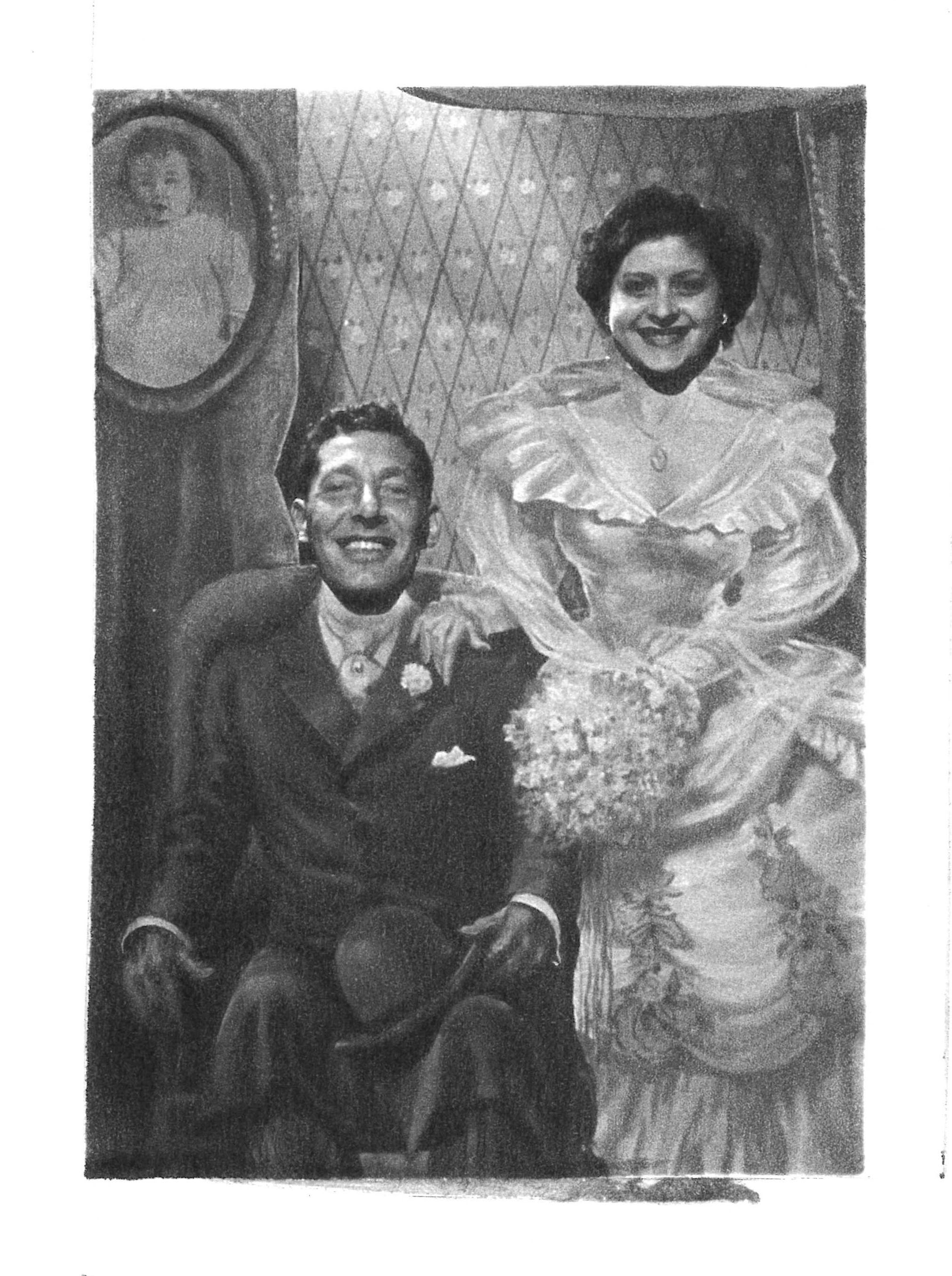
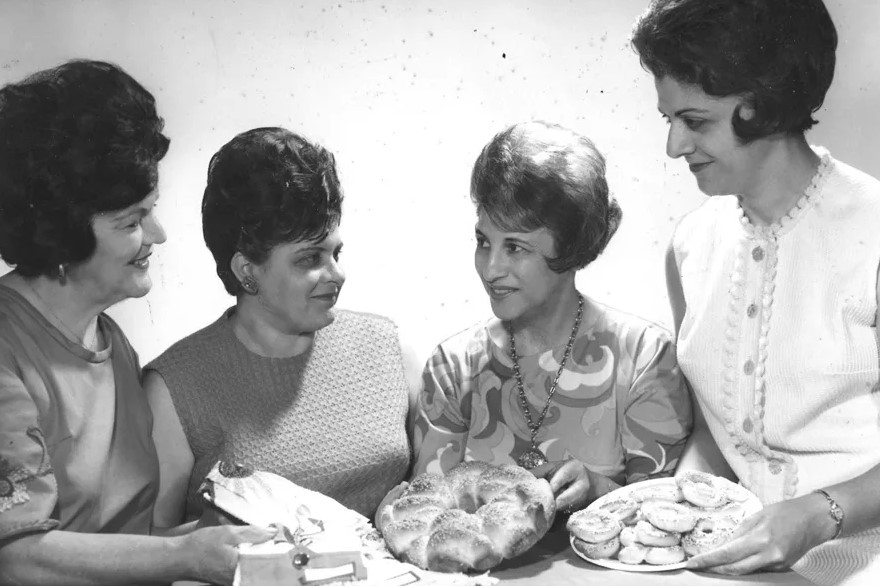
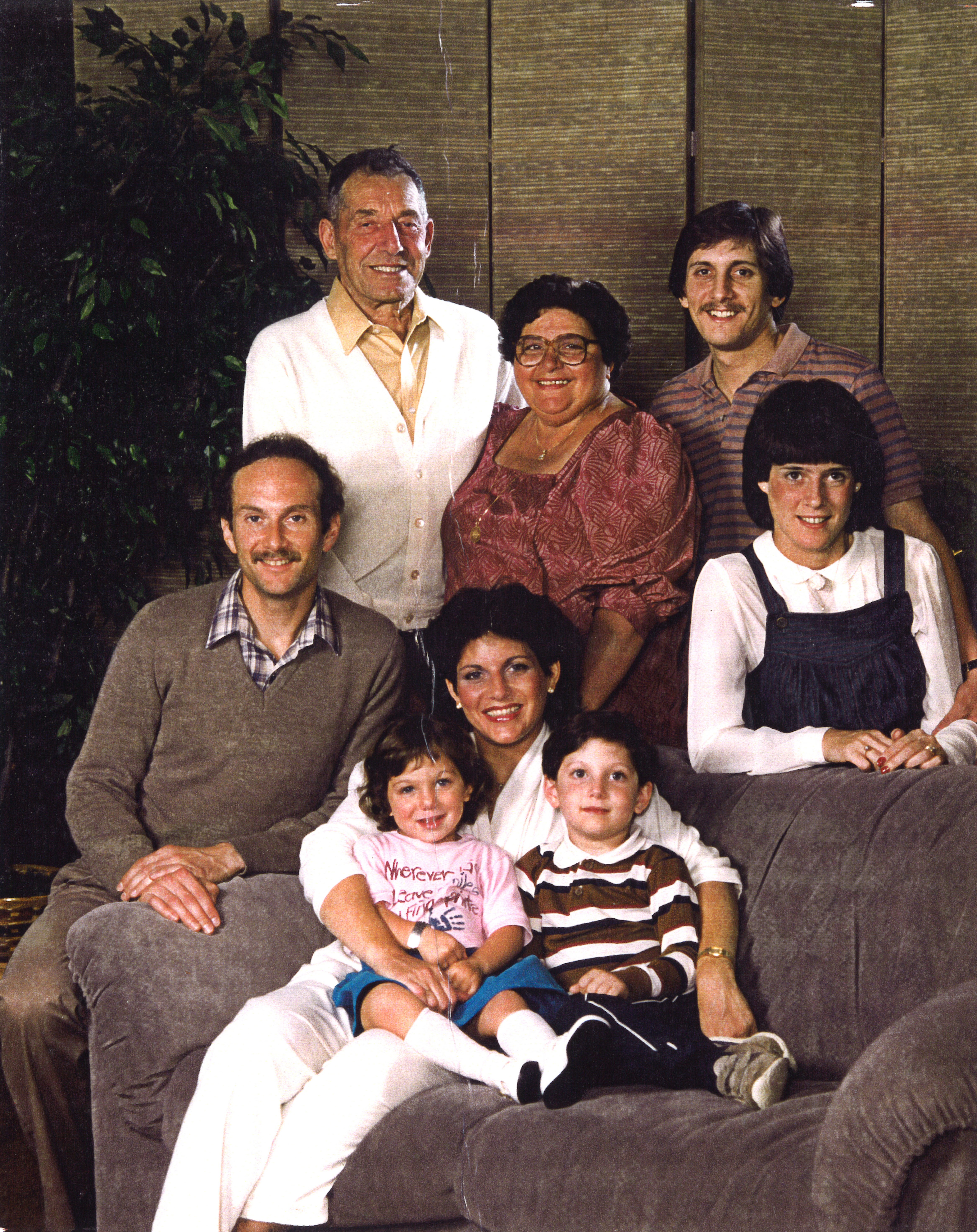
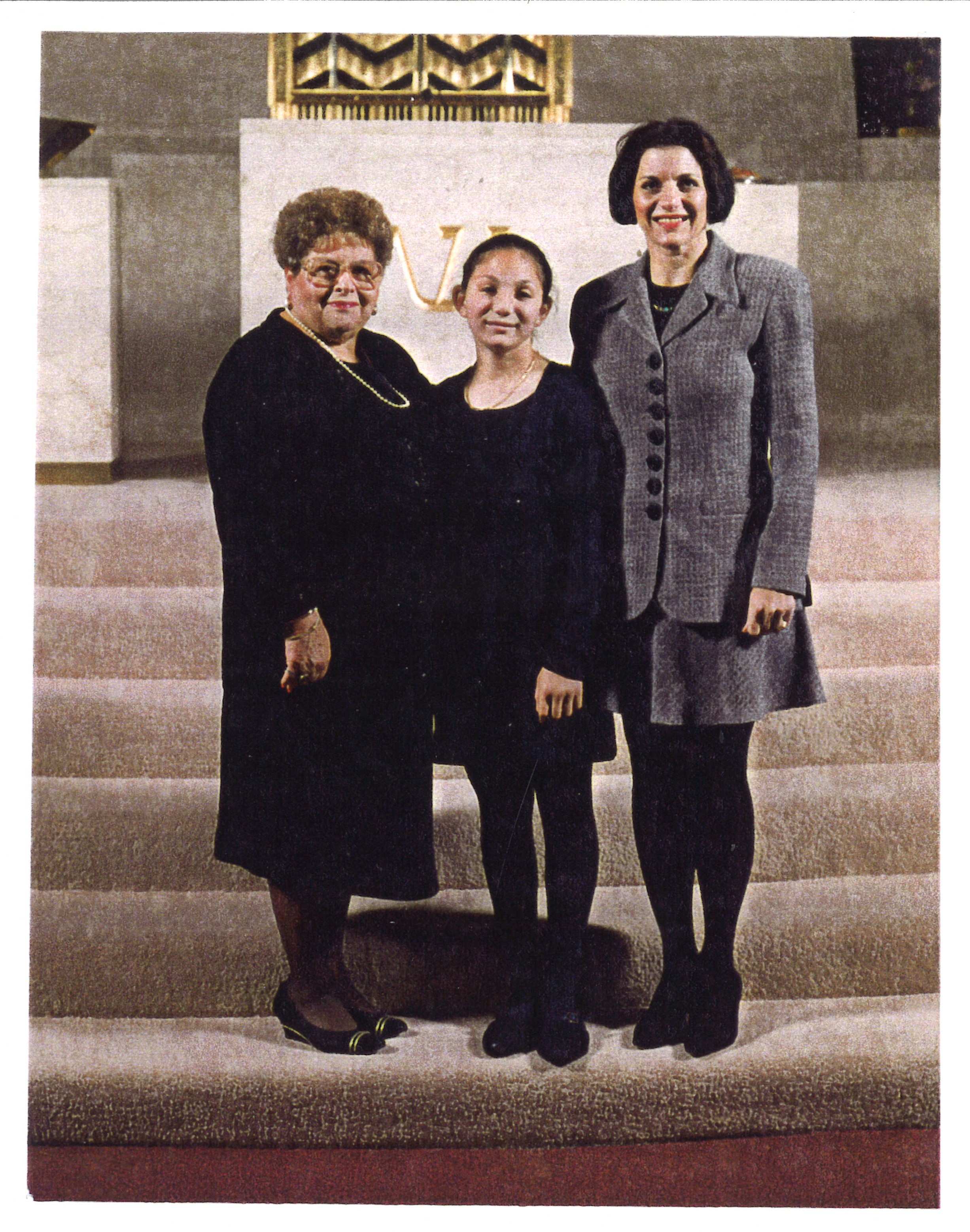

Fred Kahn - Germany
-
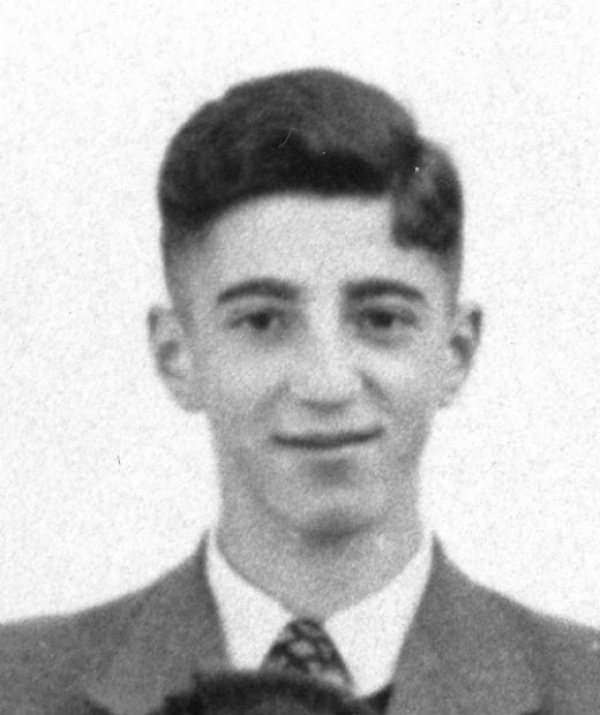
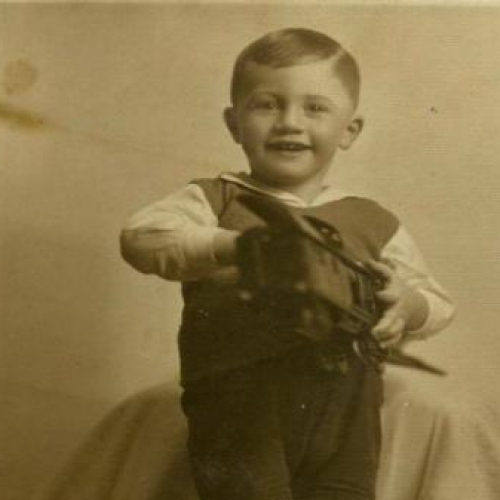
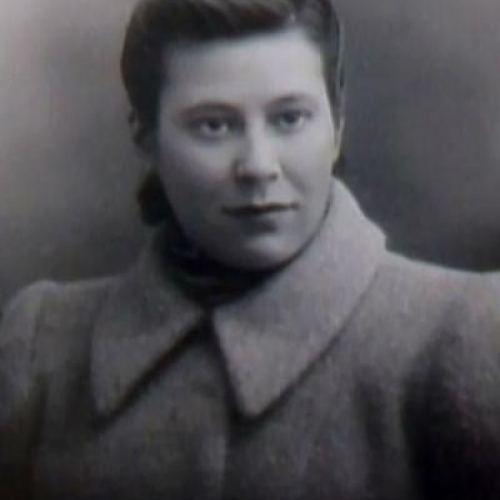
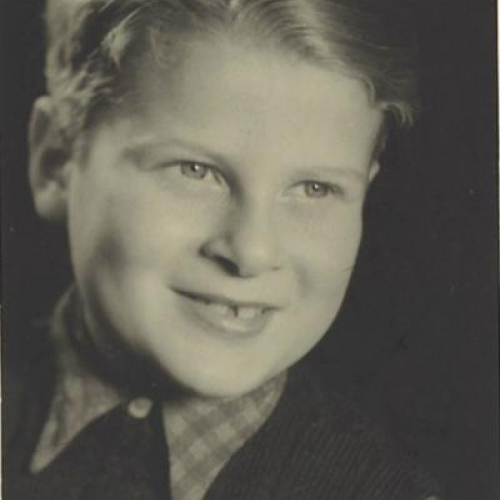
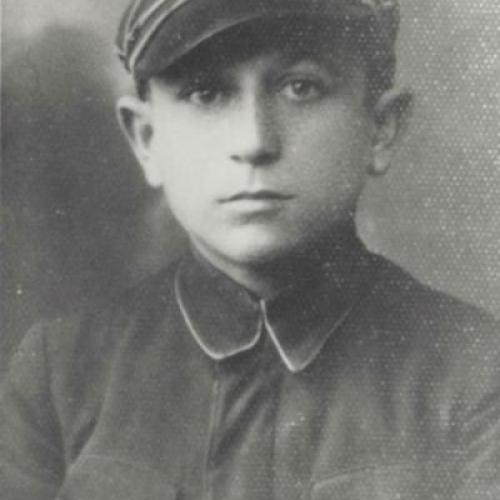
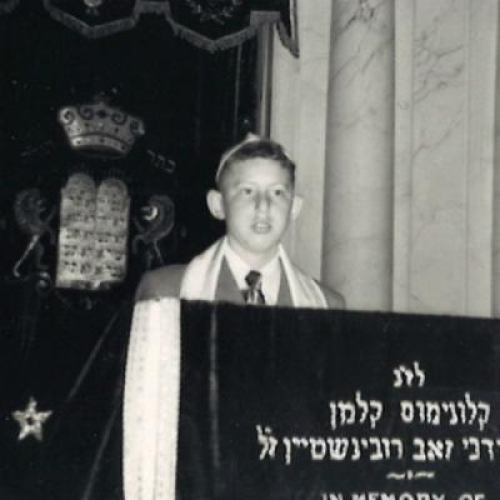
Fred Kahn, on his Bar Mitzvah, Germany, 1937 “Stutthof was a camp with over 100,000 people. People of all races, all nationalities, anybody who did anything against the Nazi regime was in there. There were murderers in there, there were homosexuals in there…Jews as well as non-Jews. The crematorium in this camp was burning day and night, day and night. Oh, we knew what was going on.” - Fred Kahn
Fred was born on May 25, 1924, in Laubenheim, Germany, a small village in the Rhine Valley. In November 1938, on Kristallnacht, Fred and his father were arrested for the first time. When they were released, the family moved to Cologne to live amongst strangers, hoping no one would recognize them as Jews. However, in December 1941, the Gestapo forced them onto the first non-Latvian transport to the ghetto of Riga, Latvia. Over the next 3 ½ years, Fred was imprisoned at the Salaspils and Stutthof concentration camps, where he performed hard labor for up to 18 hours per day and survived many near-death experiences.
After being liberated on March 10, 1945, he returned to Germany to find that most of his family had been killed. However, his brother Eric had fled Nazi Germany in 1939 and lived in Chicago, and his aunt and uncle Meta and Ludwig Stern lived in Seattle. They sponsored Fred’s immigration to the United States in August 1950. When he arrived in Seattle, he thought, “I never saw a city so beautiful…I really fell in love. This town’s for me.” He became a small business owner as a grocer and, later, a meat wholesaler. He married Esther Chiprut on January 12, 1952, with whom he had three daughters: Erna, Vivan, and Susan; and numerous grandchildren and great-grandchildren. Fred passed away on January 22, 2018.
1924-2018
- More About This Survivor:
Transcripts for Video Clips — Fred Kahn
Full Testimony - Fred Kahn (1990, 2:03:52)
Fred's Friend Kurt (1:15)
Deportation (1:15)
Timeline of Fred Kahn's experiences (1938-1950)
Oral History Audio and Transcript - Washington State Jewish Historical Society/University of Washington Libraries Special Collections
-
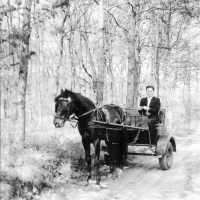
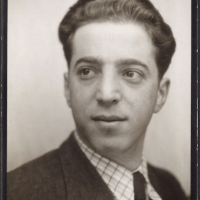
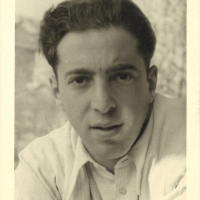
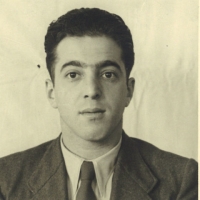
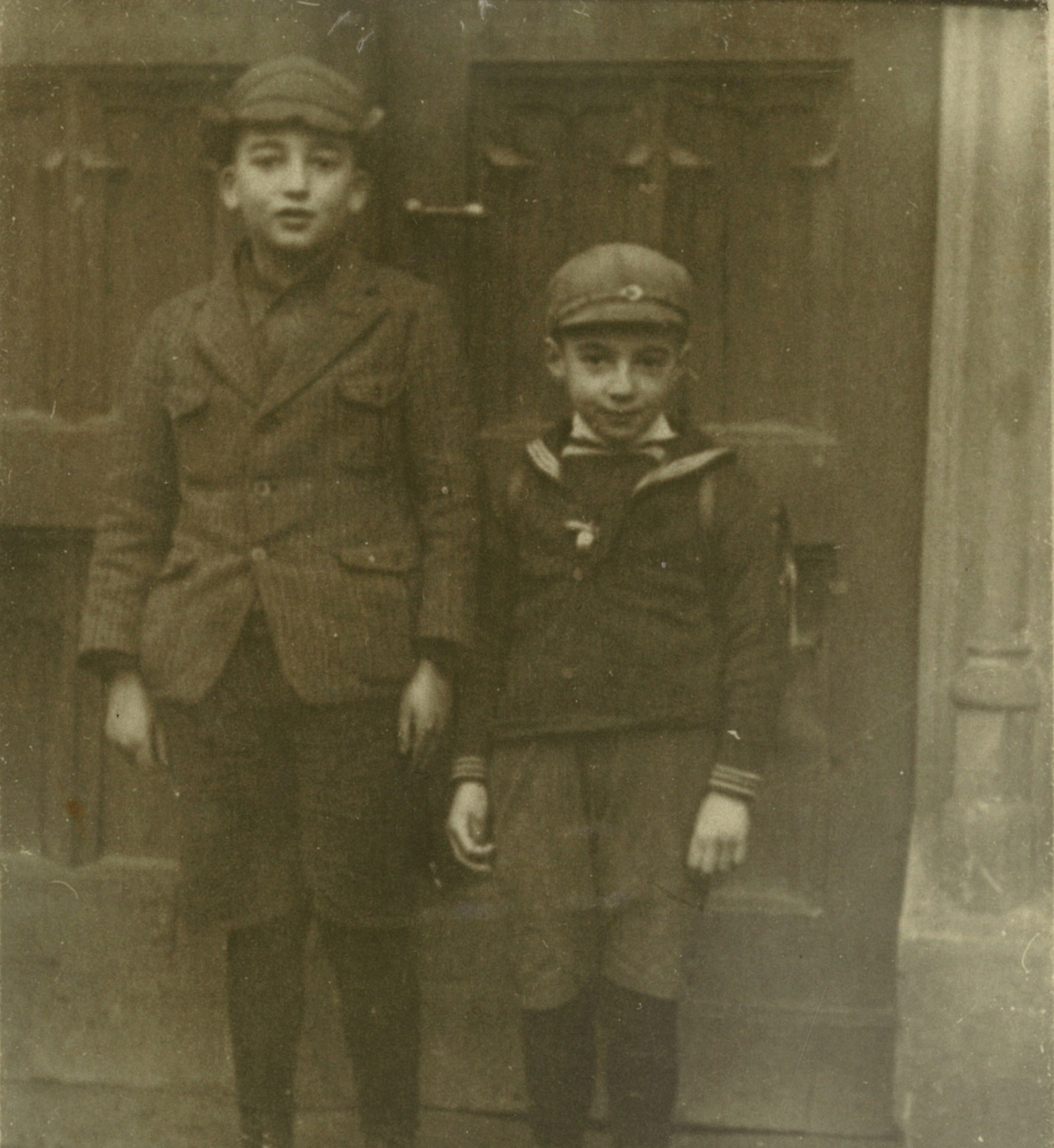
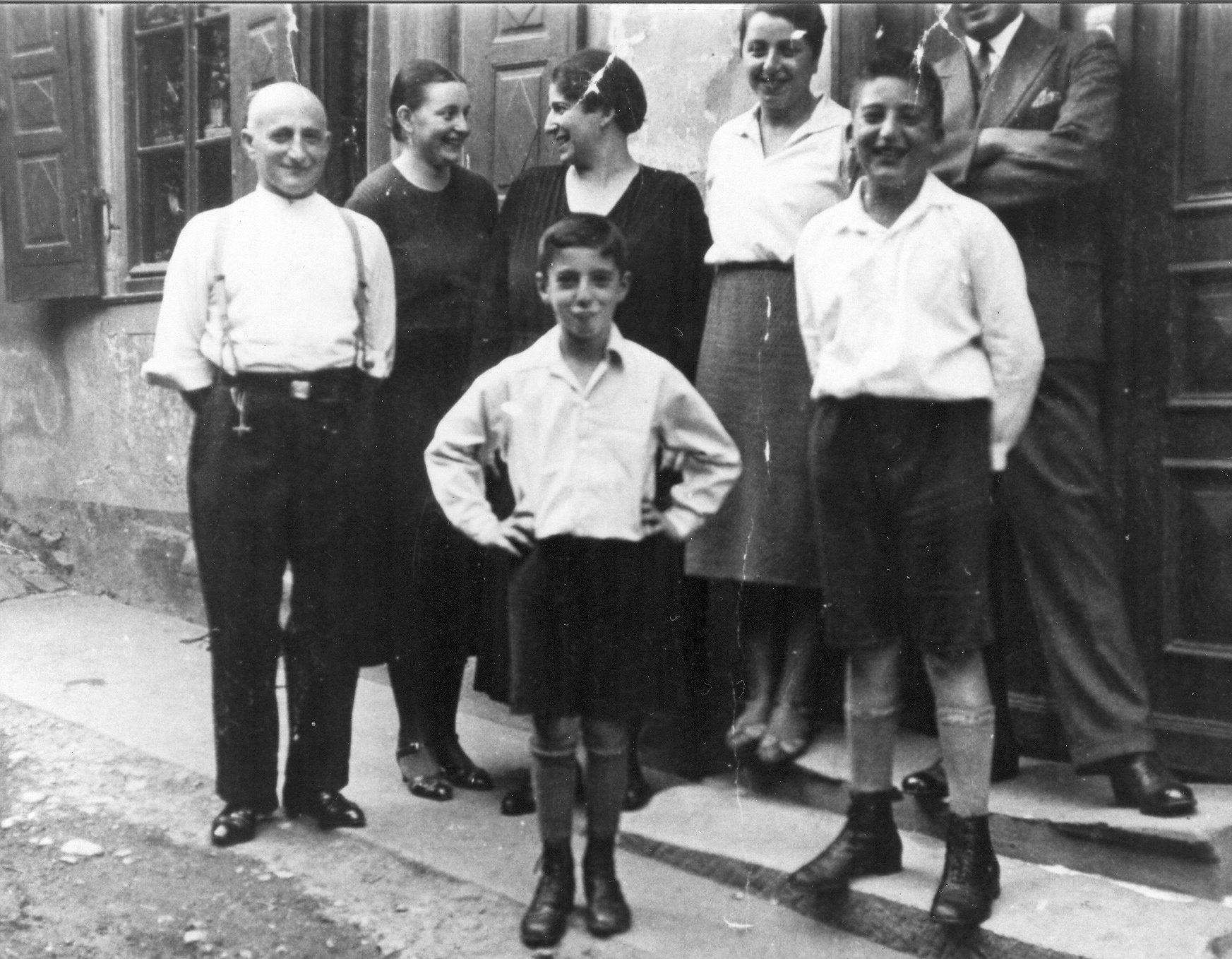
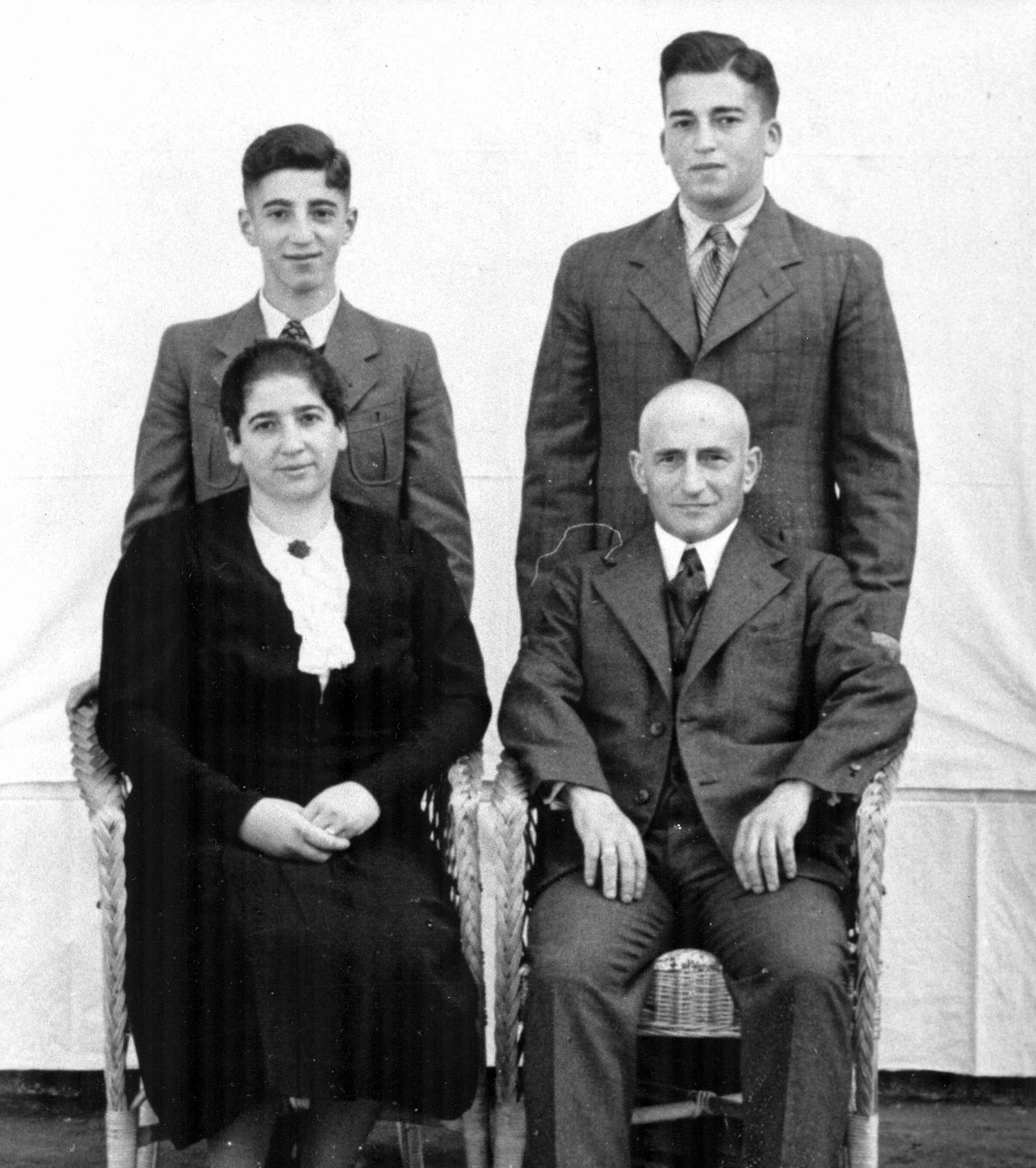
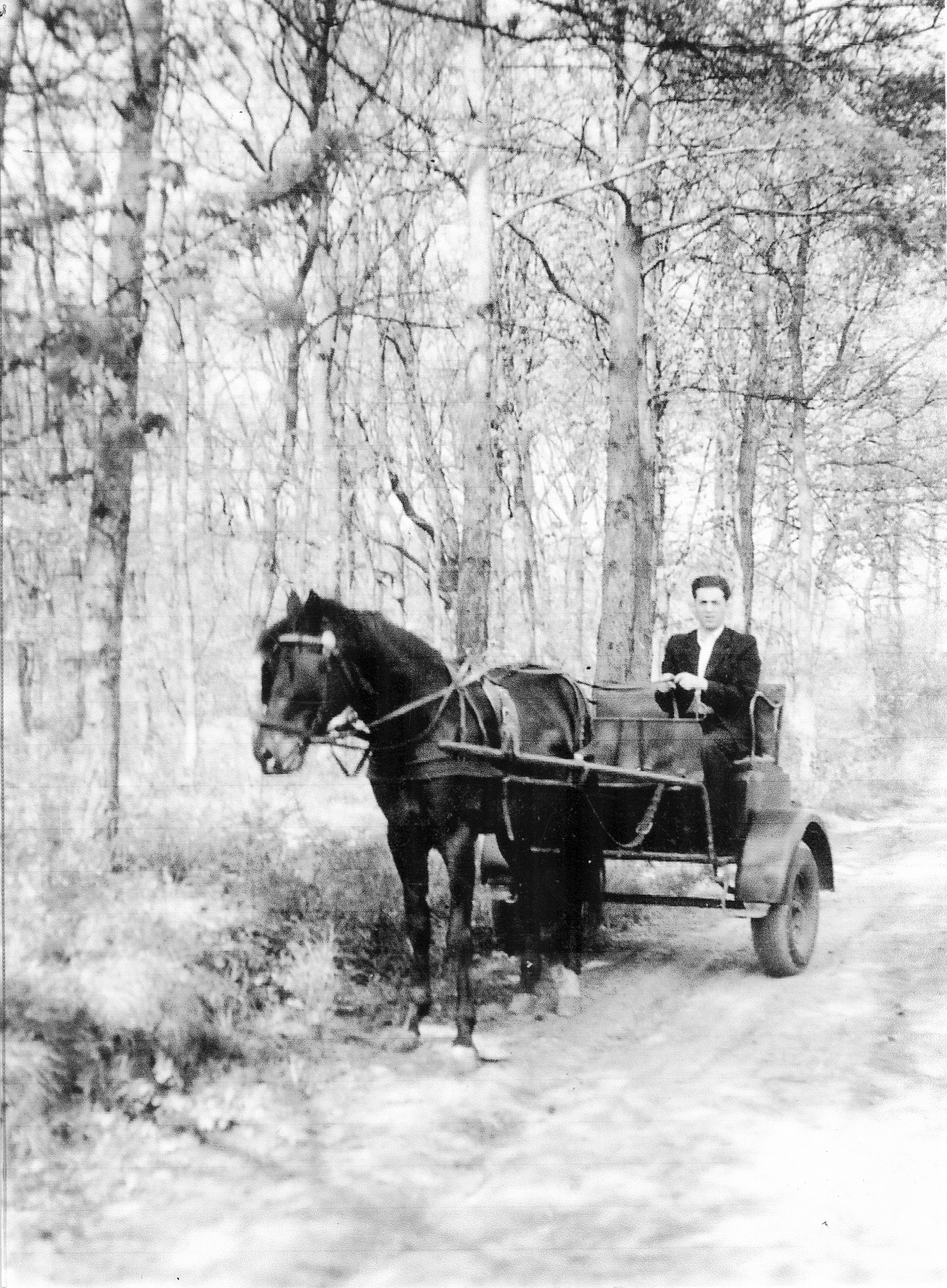
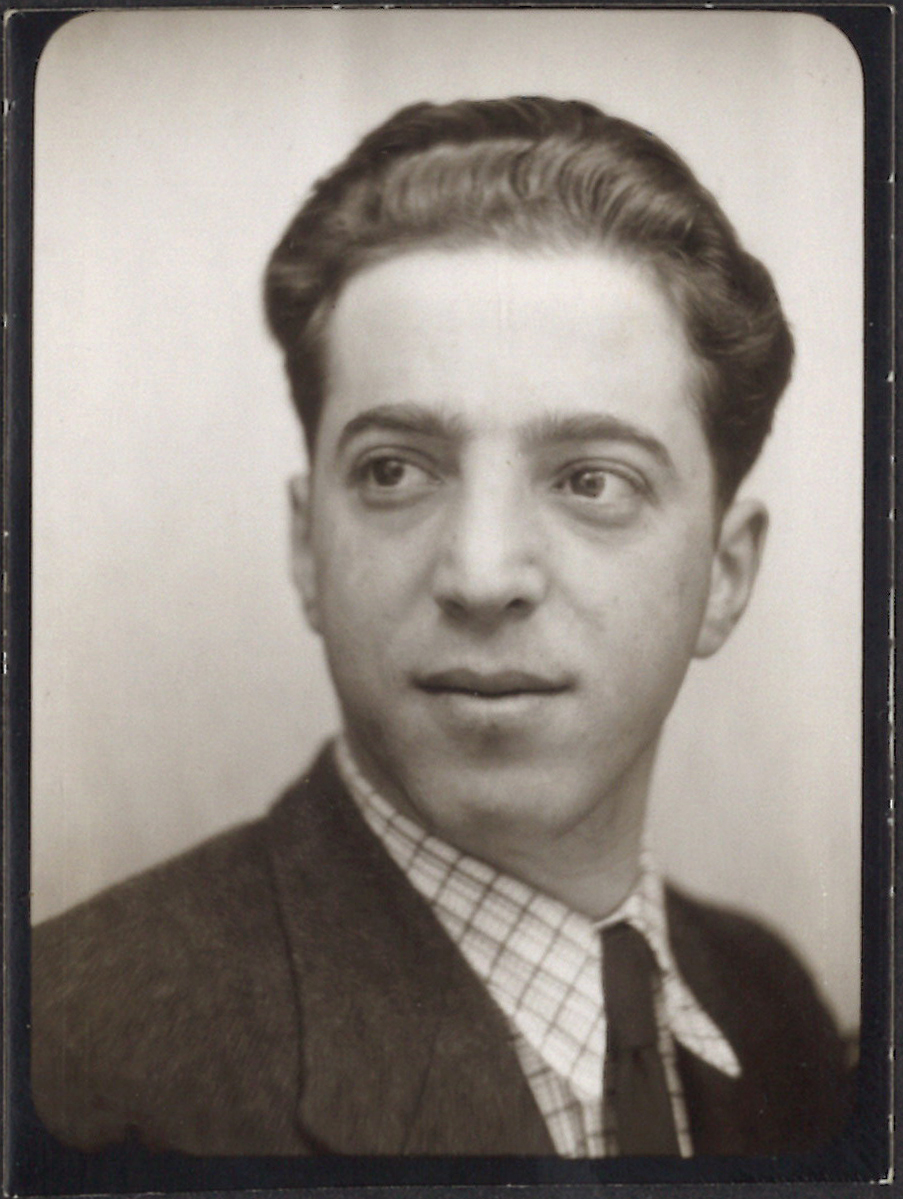
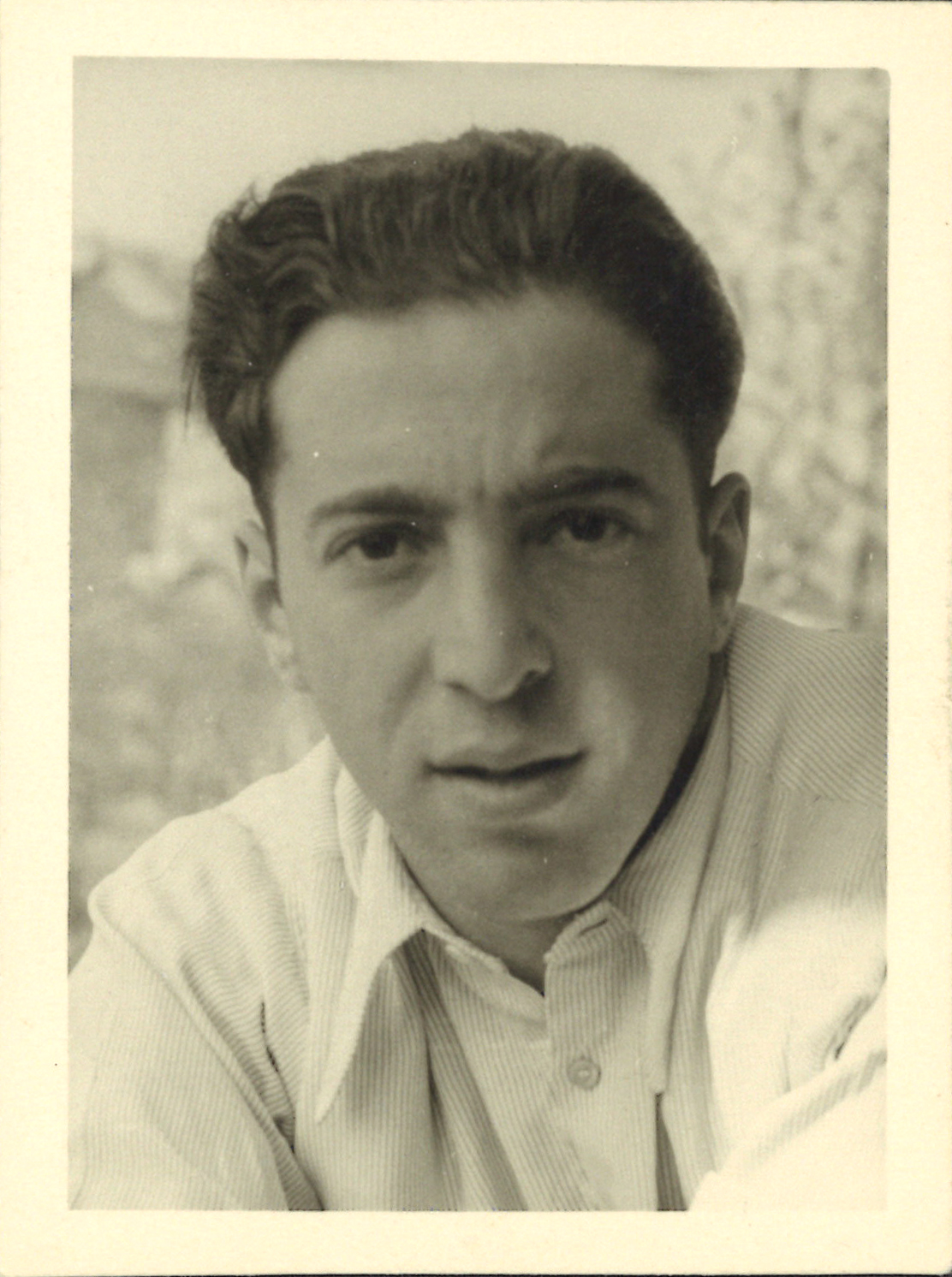
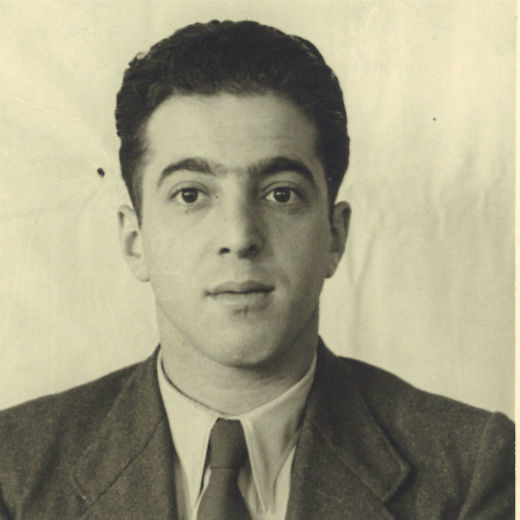

Thomas Blatt - Poland
-
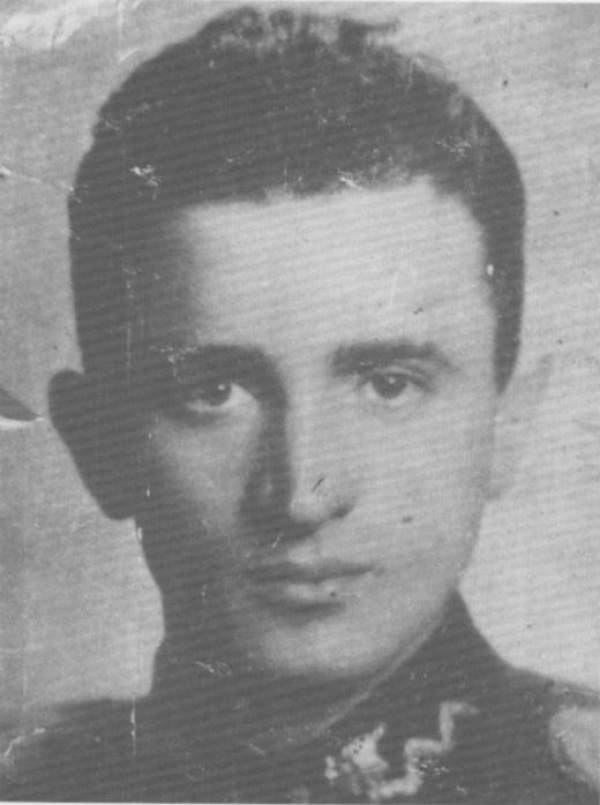
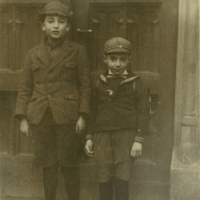
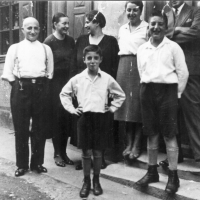
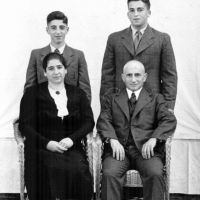
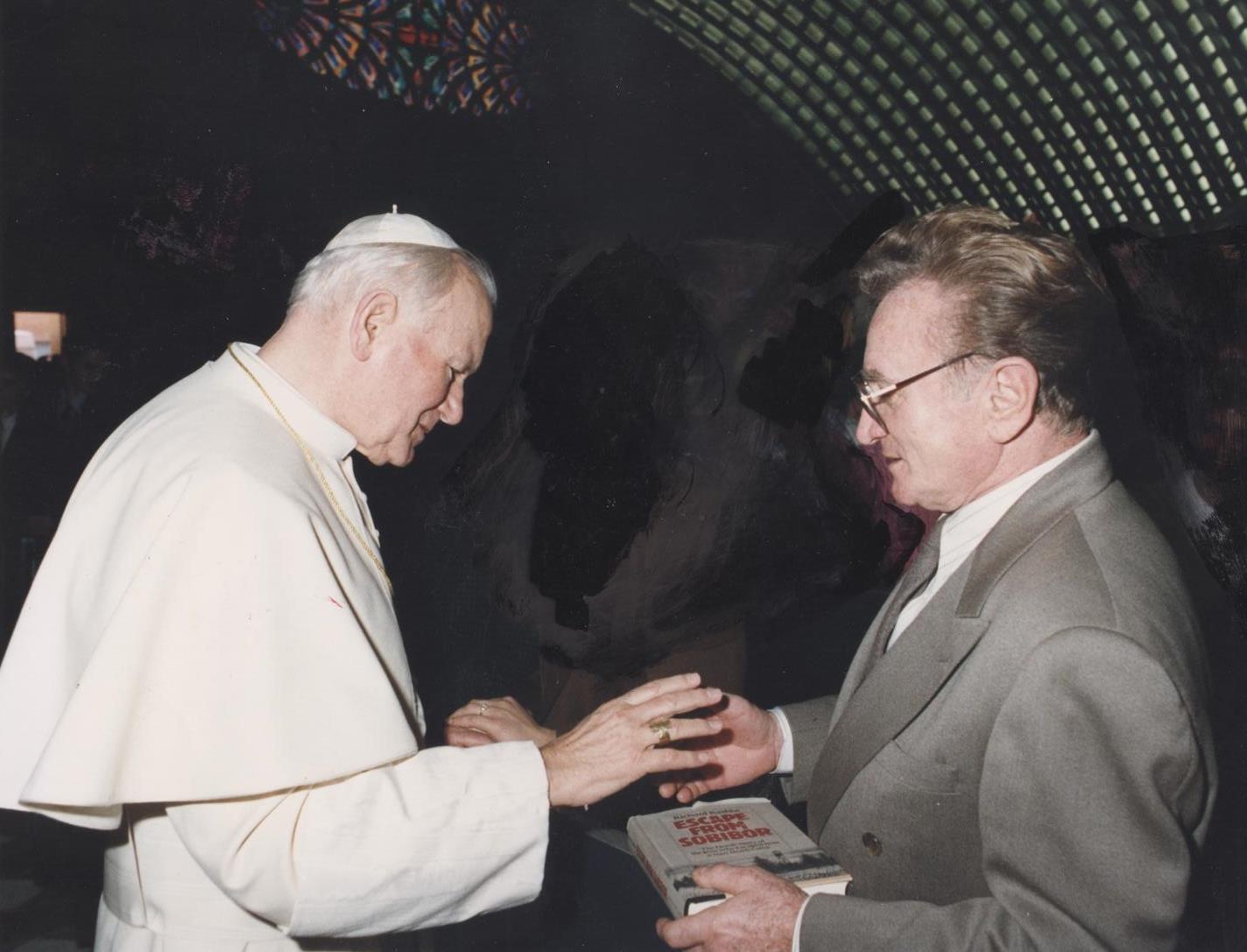
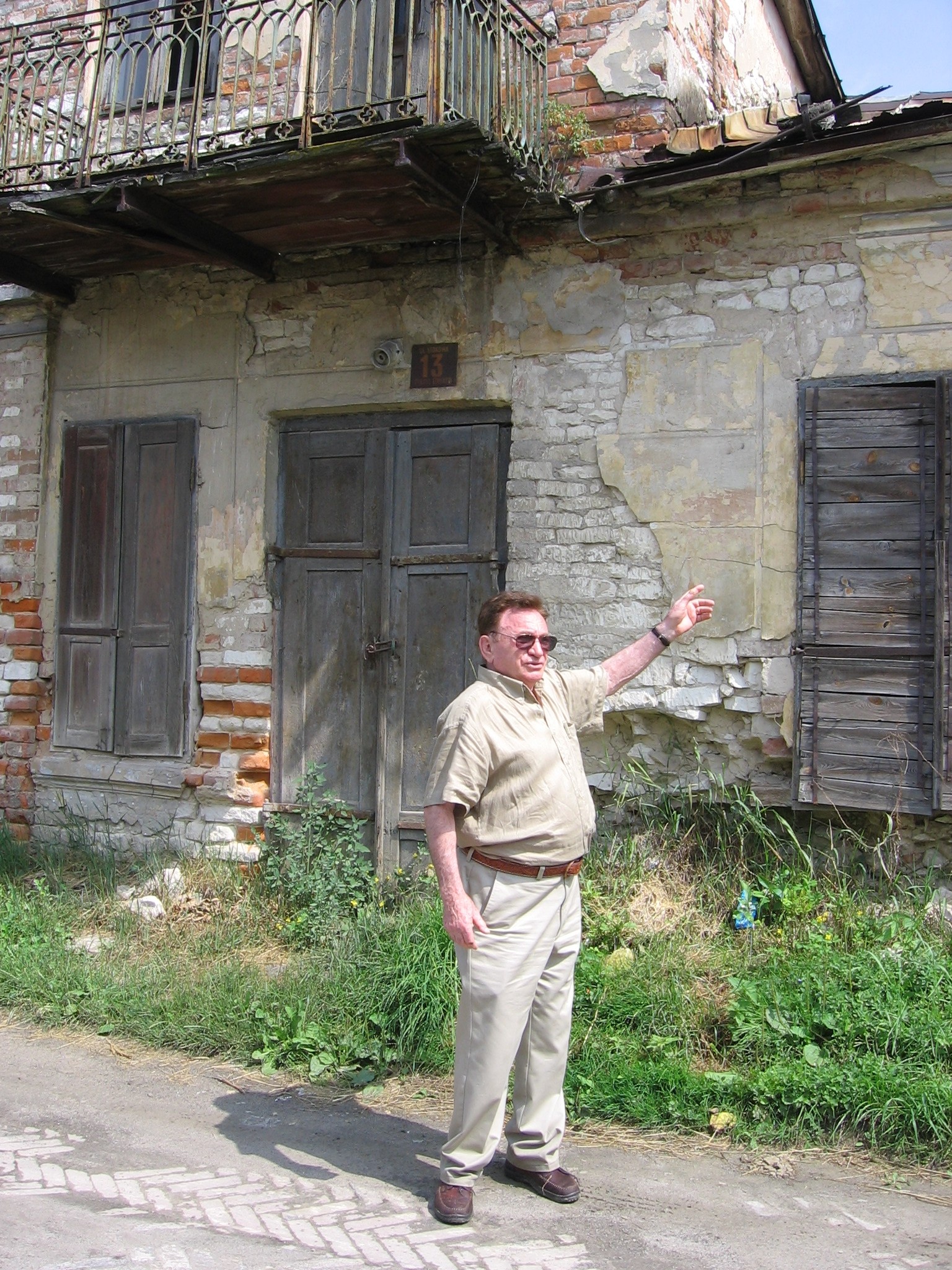
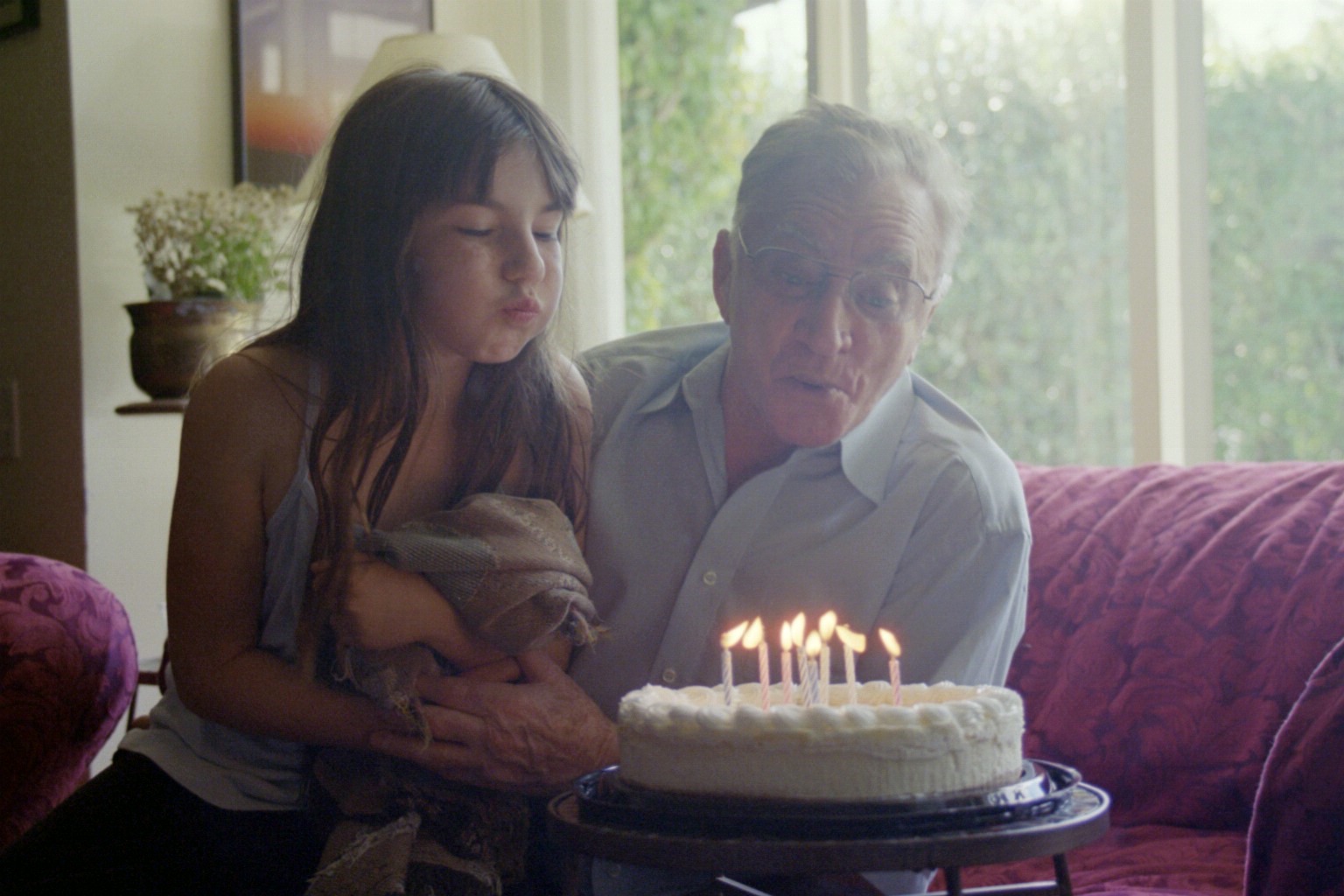
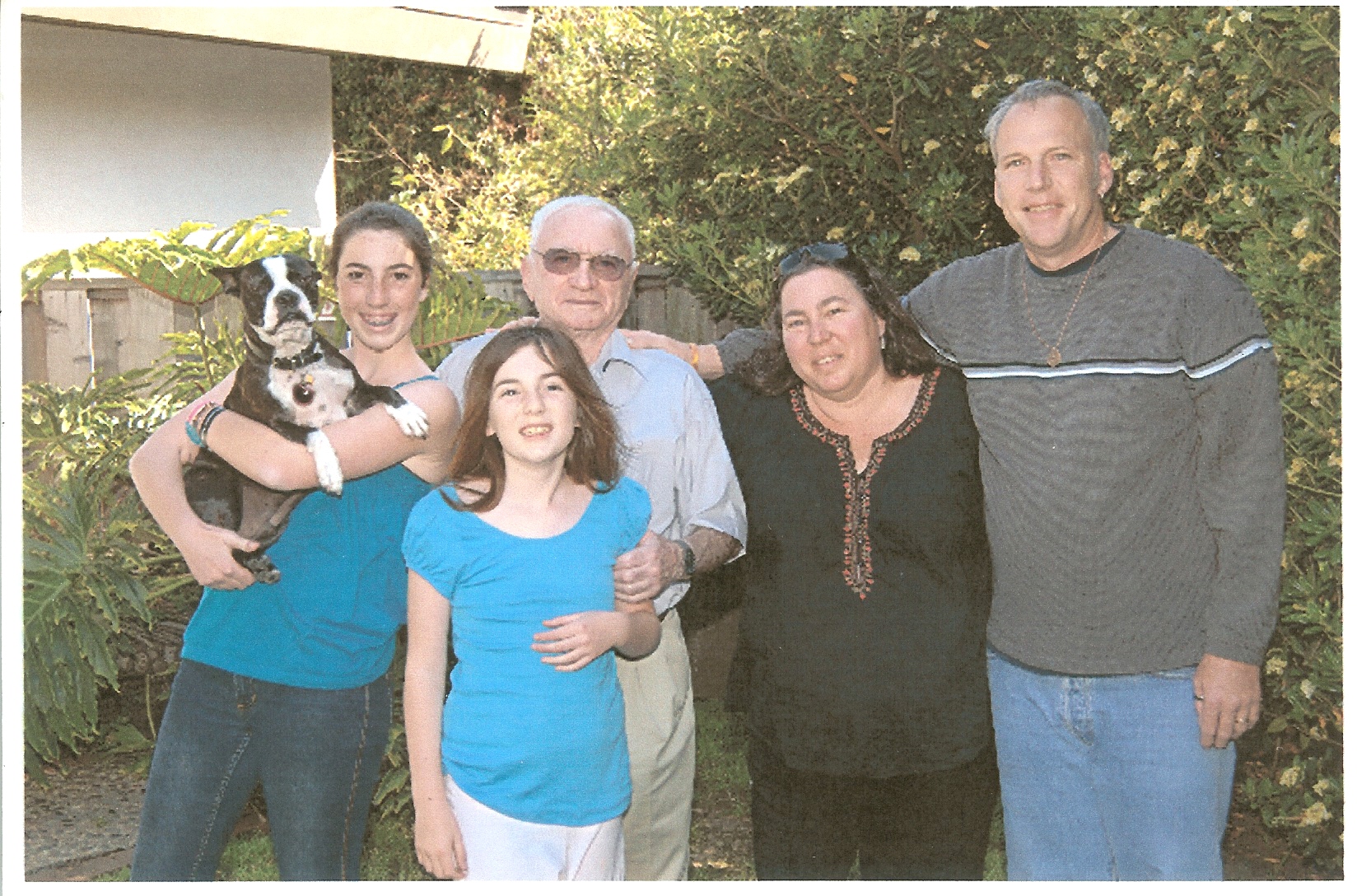
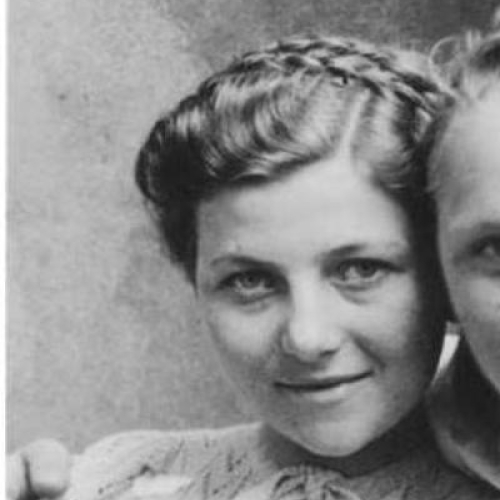
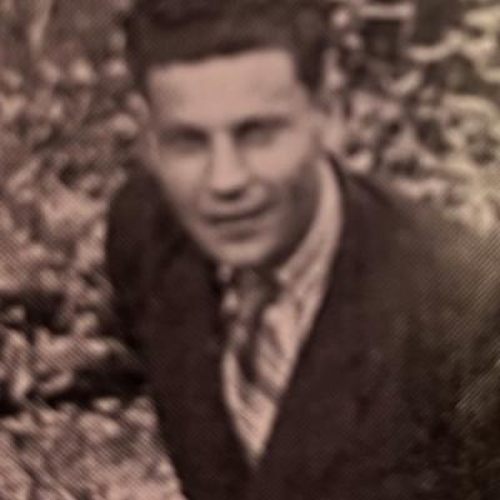
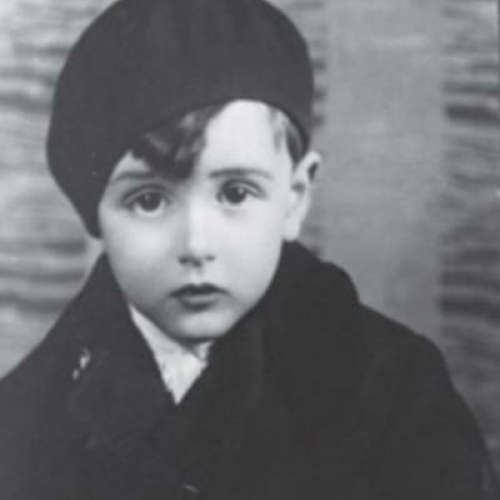
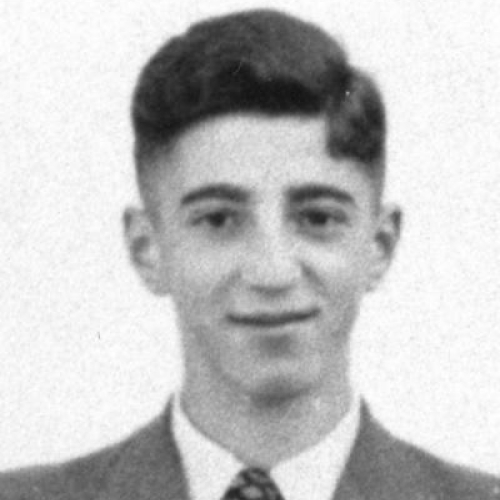
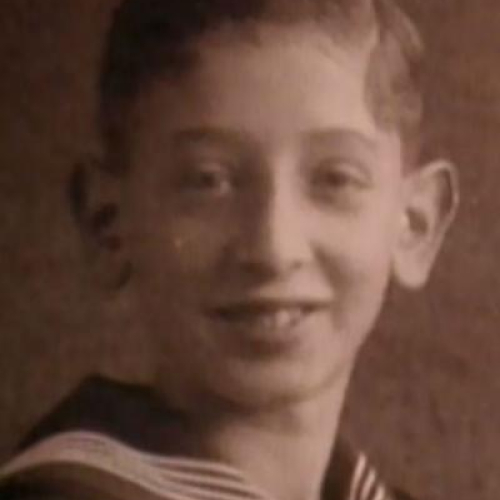
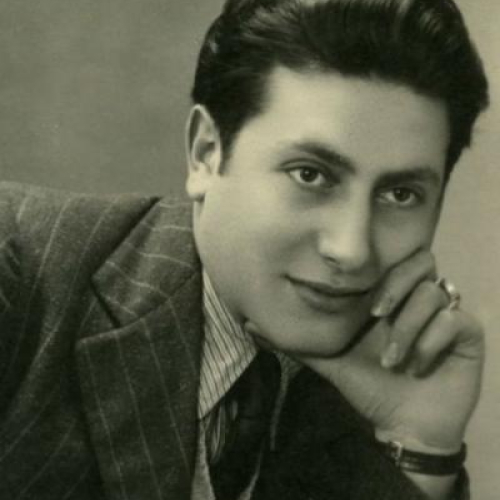
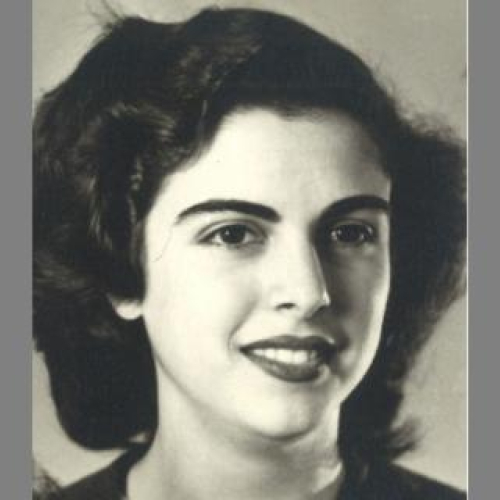
Thomas Blatt, circa 1950 "We had no dreams of liberation. We hoped merely to destroy the camp and to die from bullets rather than from gas. We would not make it easy for the Germans." – Thomas Blatt, From the Ashes of Sobibor, 1997
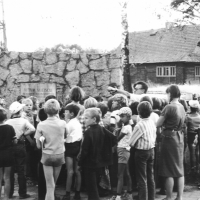
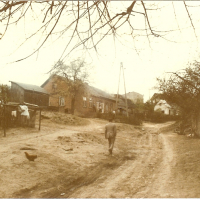
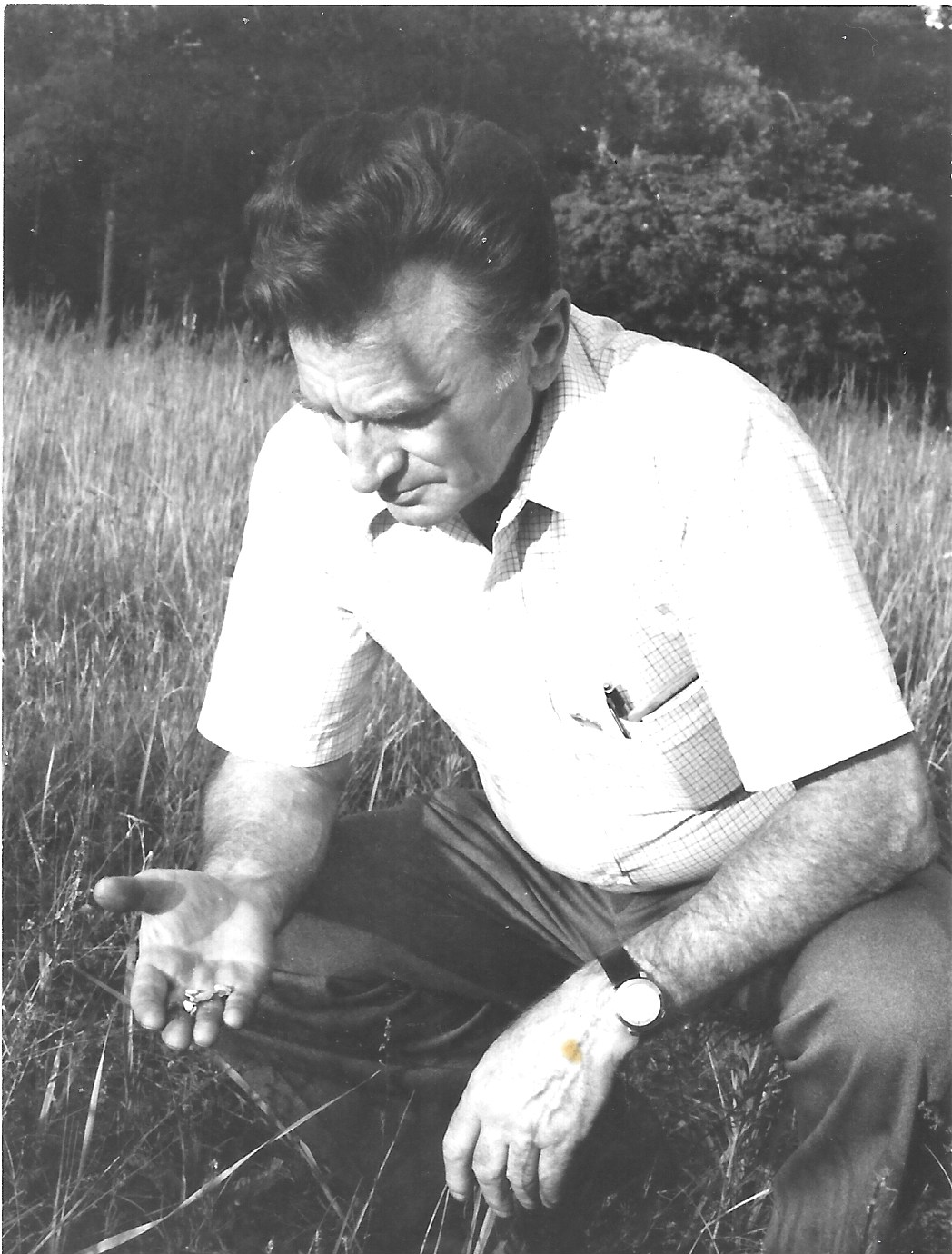
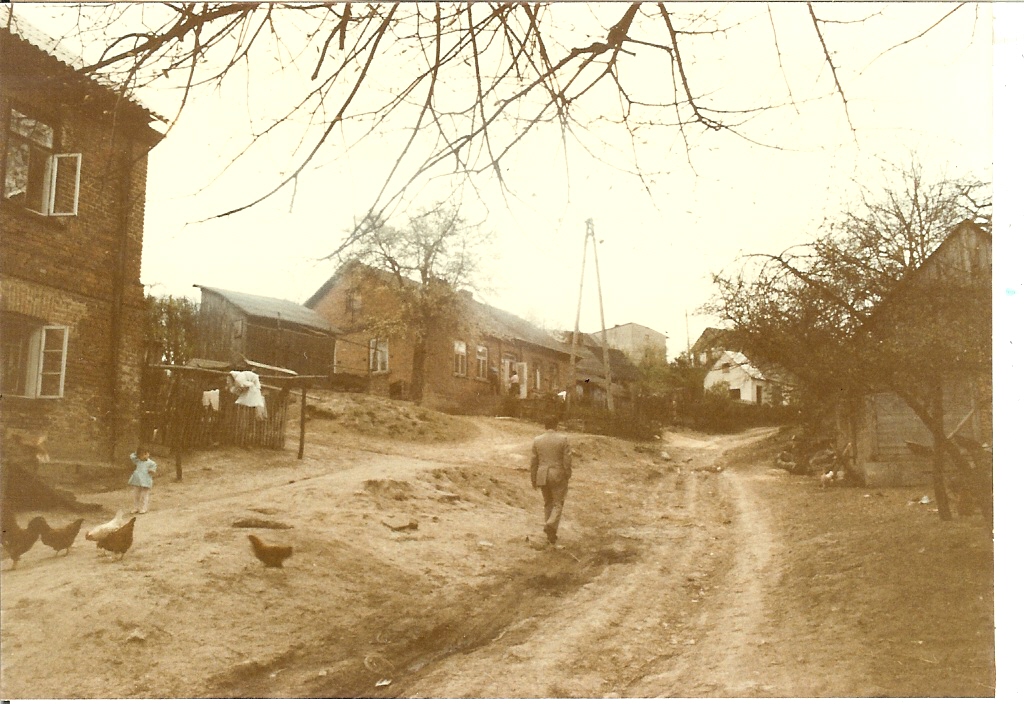
Thomas "Toivi" Blatt was born on April 15, 1927 in Izbica, Poland, a small town near Lublin, Poland. After the Nazi occupation of his town in 1939, Blatt escaped from the ghetto in Izbica, but was caught and imprisoned at the age of 15. He managed to escape from the prison and return to Izbica.
On April 28, 1943, the Nazis deported Blatt and his family to the Sobibor death camp. There, his father, mother, and little brother were separated from him and murdered. One of the SS officers picked Blatt out and said, "You will be my shoeshine boy." This meant that Blatt joined the group of slave laborers in the camp.
In Sobibor, Blatt became a member of the camp's Jewish resistance group. He was designated to run messages during a planned revolt. On October 14, 1943, the prisoner revolt resulted in the killing of nearly all the Nazi staff and allowed over 300 (out of the 600 who attempted escape) fellow slave laborers to break free. Unfortunately, many of these escapees lost their lives on the minefields surrounding the camp. Of the 300 who escaped, only 54 survived to the end of the war.
Blatt and two young fellow prisoners were among those who successfully escaped. They found refuge with a farmer who agreed to hide them for the money. However, the three boys were eventually betrayed and mercilessly shot. Blatt, left for dead with a bullet in his jaw, managed to escape.
Blatt's story is told in his two books: Sobibor: The Forgotten Revolt and From the Ashes of Sobibor.
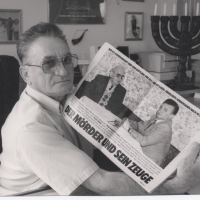
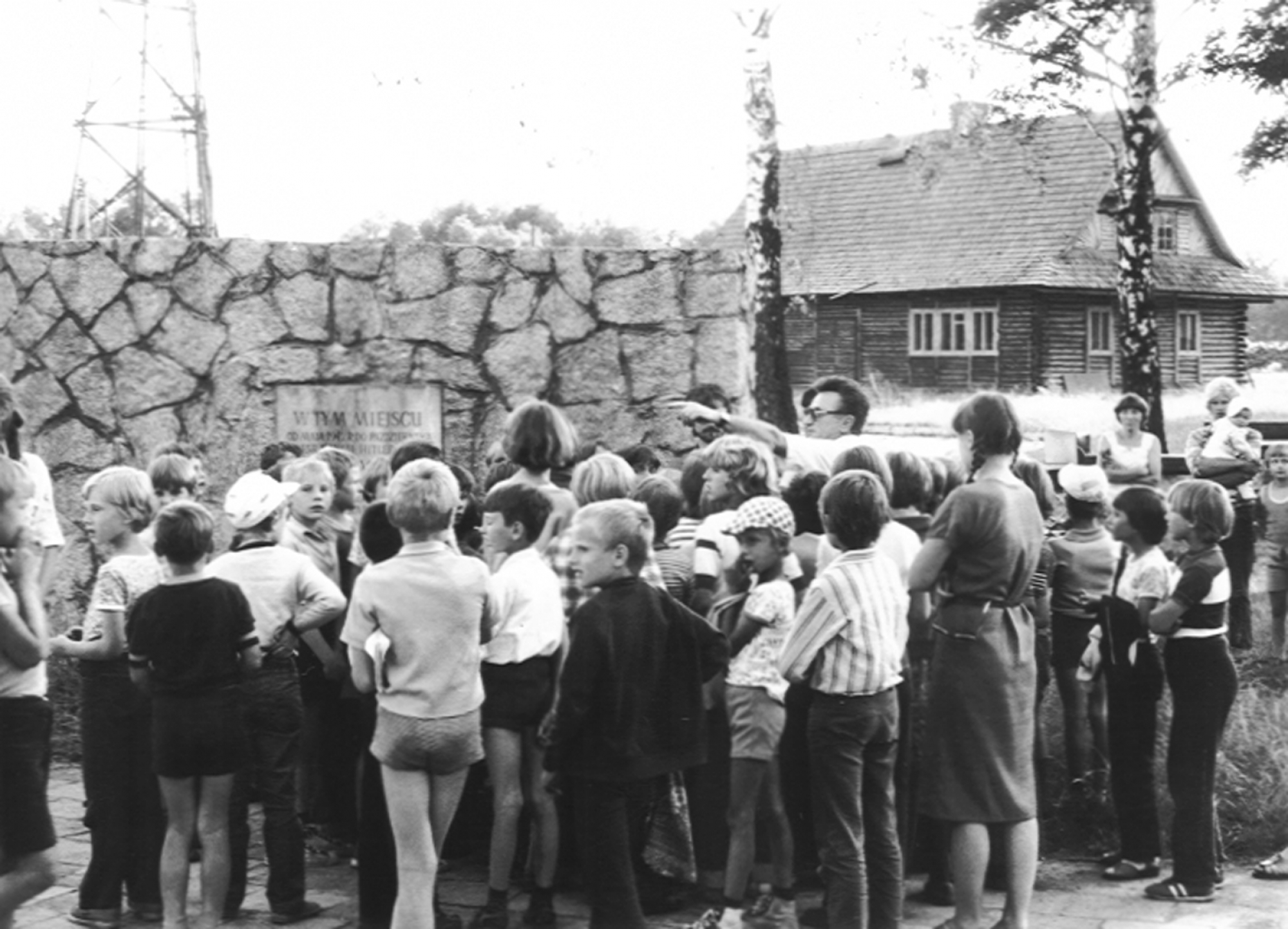
Blatt dedicated his life to accurately preserving the memory of the more than 250,000 Jews whom the Nazis murdered at the Sobibor death camp. He regularly returned to Europe to appear on talk shows, give lectures, and continue his research. He was depicted by an actor in the award-winning made-for-television movie called "Escape from Sobibor," and acted as chief adviser for the film.
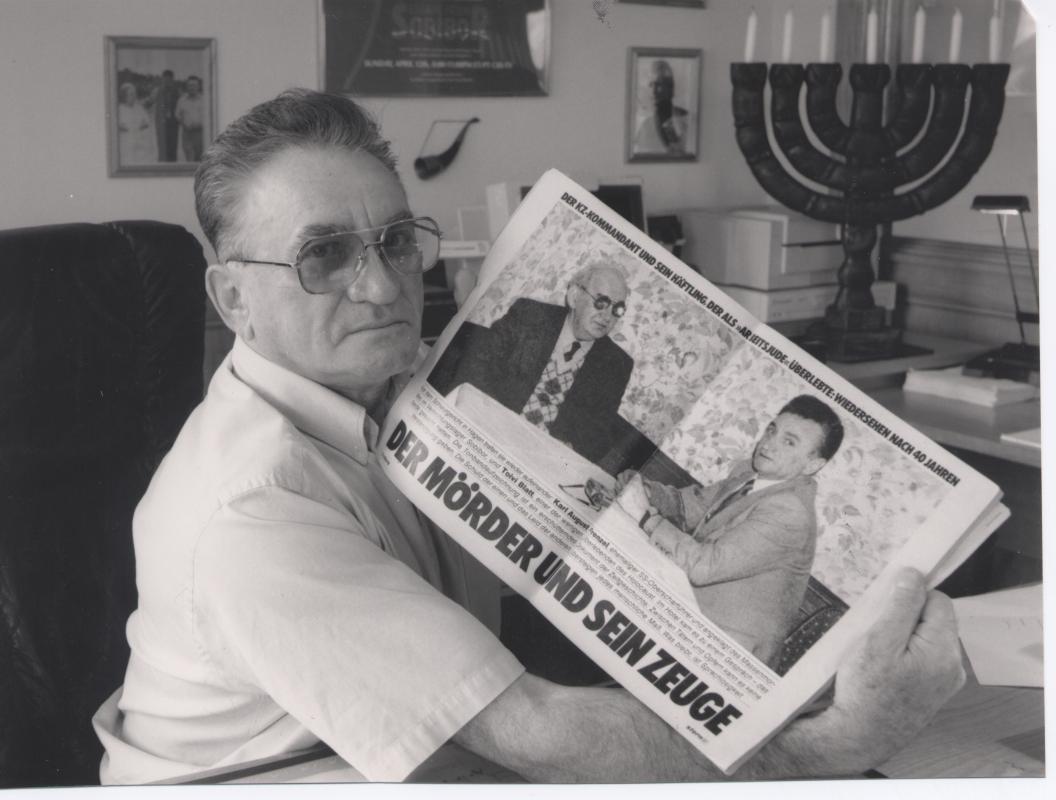
Blatt traveled to Munich in 2011, in spite of his failing health, to testify in the trial of former Sobibor SS guard Ivan (John) Demjanjuk. His compelling courtroom testimony helped prosecutors in Munich win Demjanjuk's conviction on more than 28,000 counts of serving as an accessory to murder.
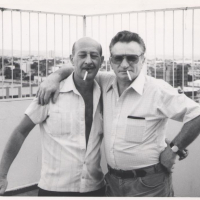
Thomas Blatt lived in Seattle for more than 20 years and was a member of the Holocaust Center for Humanity's Speakers Bureau. He later moved to Santa Barbara to live with his daughter. Blatt passed away in October 2015.
1927-2015
- More About This Survivor:
Transcripts for Video Clips — Thomas Blatt
Full Testimony - Thomas Blatt (2009, 51:36)
Shoeshine Boy (1:19)
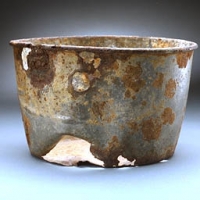
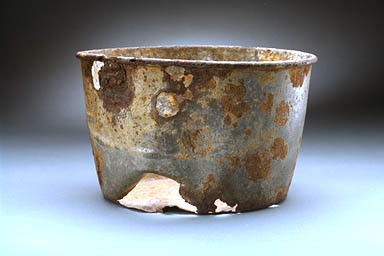
Bowl from Sobibor — Featured Artifact
From the Ashes of Sobibor and Sobibor: The Forgotten Revolt - Books by Thomas Blatt that detail his story
-















Video testimonies, teacher resources, and the work of the Holocaust Center for Humanity are licensed under CC BY-NC-ND 4.0. To view a copy of this license, visit https://creativecommons.org/licenses/by-nc-nd/4.0/
This license requires that reusers give credit to the Holocaust Center for Humanity. It allows reusers to copy and distribute the material in any medium or format in unadapted form and for noncommercial purposes only.
