

Member Magazine
First Edition
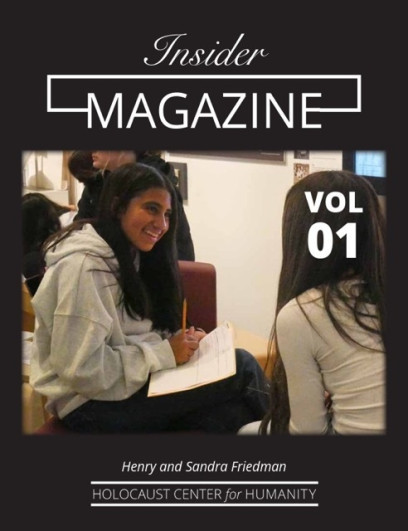
Click to download!
Plan Your Visit

Hours:
Sunday: 10am-4pm
First Thursday: 4pm-7pm*
*Free First Thursdays! Check out special exhibitions. Refreshments available. No tickets needed.
The museum will be closed on Sunday, July 5, 2026.
Museum members can enjoy unlimited admission as well as other benefits.
become a member
Student Field Trips and Adult Group Tours
Trained docents and museum educators are available to lead these group experiences. Field trips and groups tours can be scheduled on weekdays and Sundays.
- Schedule a field trip
- Schedule a group visit
2045 2nd Avenue,
Seattle, WA 98121
(206) 582-3000
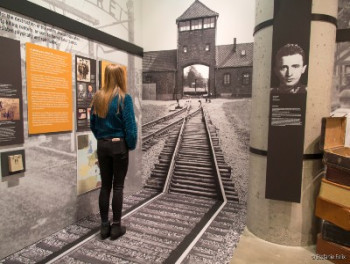
Finding Light in the Darkness
Exhibit
Through stories and artifacts of Washington State Holocaust survivors, the museum’s exhibit engages visitors in this history and challenges them to consider how each person’s actions make a difference.
Visitors can interact with video testimony from local Holocaust survivors, explore artifacts that bring history to life, and learn about local students who are upstanders in their schools and communities. Spanish translation of the exhibit is available in the museum.
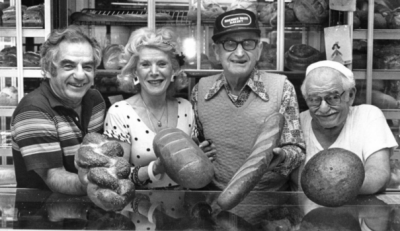 Twenty Years of Jewish Storytelling
Exhibit: May 18 - June 7, 2026
In honor of Jewish American Heritage Month (May), explore Twenty Years of Jewish Storytelling, an exhibit honoring the work of the Washington State Jewish Historical Society. More than a retrospective, Twenty Years of Jewish Storytelling is a living, traveling legacy. Visitors will be invited not only to explore the past, but also to contribute to the future through its expanding digital museum, the Washington Jewish Museum. Offered in partnership with the Washington State Jewish Historical Society. Image: Brenner Brothers Bakery, 1983
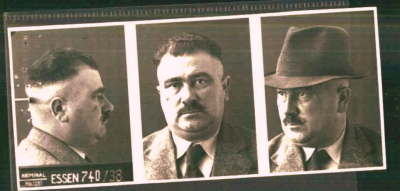 Remembering & Resisting: LGBTQ+ History from Nazi Germany to Today
exhibit: JUNE 28 - August 9, 2026
Remembering & Resisting: LGBTQ+ History from Nazi Germany to Today premiers on the West Coast at the Holocaust Center for Humanity. This traveling exhibit, created by the Pink Triangles Legacy Project, examines the Nazi persecution of queer and trans people and the ongoing struggle to reclaim their history. Through stories of survival, activism, and remembrance, it reveals how the struggle to reclaim LGBTQ+ history continues to shape debates over memory and civil rights today.
"The first moment I stepped into the door, I was in awe." - Visitor
Ask a Survivor
First sunday of each month*
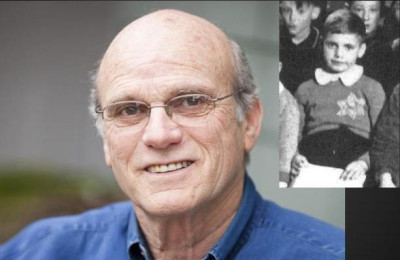
When Peter Metzelaar was 7, the Nazis seized his entire family except for Peter and his mother. With the help of the Dutch Underground, Peter and his mother were sheltered by rescuers in Holland.
After the war, Peter and his mother immigrated to the United States. Although Peter spoke no English when he first arrived in the country, he worked hard in school and went on to have a successful career as a radiology technologist. Today, he continues to be an active member of the Holocaust Center for Humanity's Speakers Bureau.
On the first Sunday of every month, Peter is available in our museum* to answer questions from the public and tell his personal story. This is a rare opportunity to hear the experiences of a Holocaust survivor in person.
* There occasionally arise circumstances where Peter cannot be in the museum as planned. Please call ahead to confirm or check our calendar for specific dates when Peter will be in the museum.
Security
All bags are subject to search, and weapons of any type are strictly not allowed in the museum, including guns, knives (even pocket knives), and pepper spray.
Directions and Parking
I-5 North
- Take the Seneca Street Exit, Exit 165, on the left
- Turn slight left onto Seneca Street
- Turn Right onto 4th Avenue
- Turn Left onto Lenora Street (Lenora is right after Virginia. If you reach Blanchard, you just passed it.)
- Turn Left onto 2nd Ave (the Holocaust Center is on the corner on the right)
I-5 south
- Merge onto Union Street via Exit 165B
- Turn Right onto 4th Avenue
- Turn Left onto Lenora Street (Lenora is right after Virginia. If you reach Blanchard, you just passed it.)
- Turn Left onto 2nd Ave (the Holocaust Center is on the corner on the right)
Parking
- Securities Building parking garage, access from 3rd or 4th Avenues between Virginia and Stewart
- Third & Stewart garage, access from Stewart between 2nd and 3rd
- There is also paid and metered street parking
Public Transit
 Free access provided to the programs, events, or activities is supported, in part, by 4Culture
About Our Collections
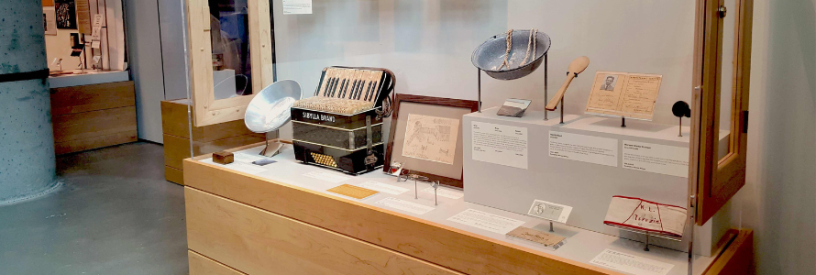
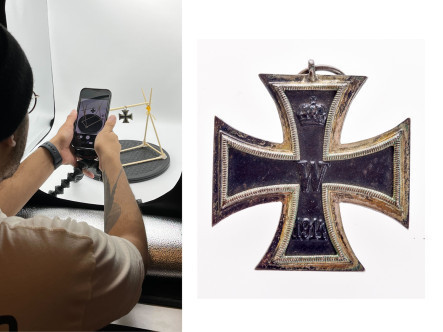
Video Testimonies
Hear the stories of Holocaust survivors in their own words.
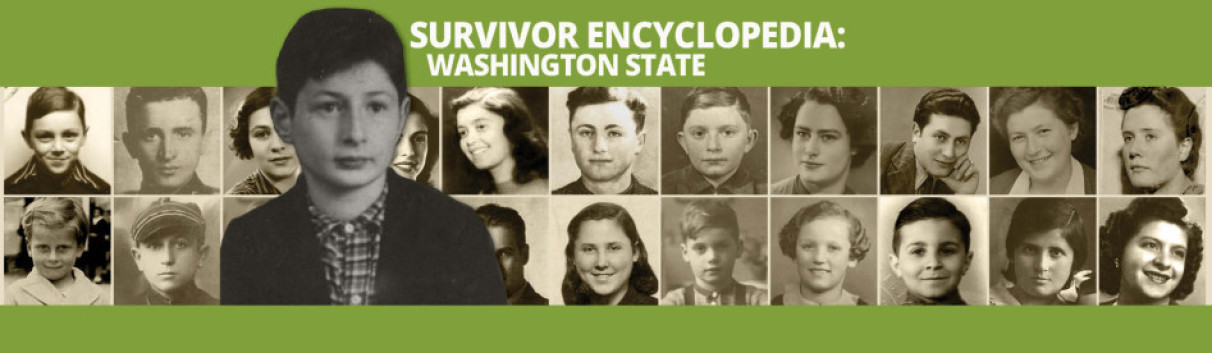
Washington State Survivor Encyclopedia
Read about the Holocaust survivors who live or lived in Washington.
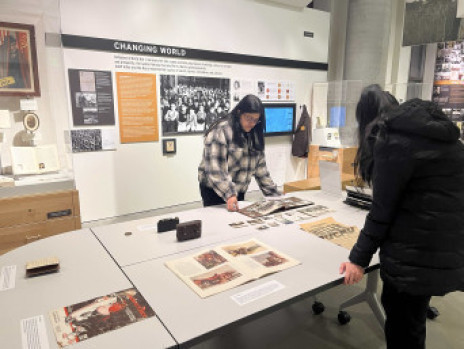
Teaching Collection
We maintain a collection of materials that students and visitors can carefully handle. It includes items such as magazines, newspapers, and journals. This collection is featured on Free First Thursdays.
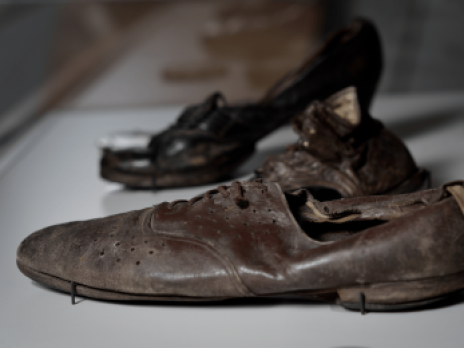
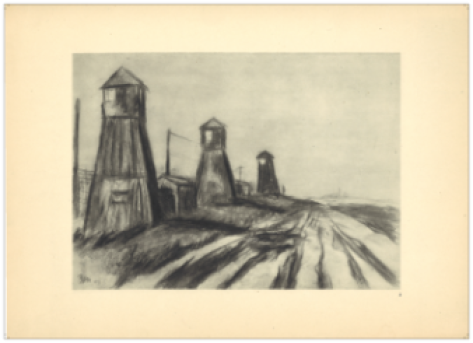
Artifacts on Loan from Auschwitz
The Holocaust Center is one of the few museums in the US to feature artifacts on loan from the Auschwitz-Birkenau State Museum, including a child's shoe, a pair of glasses, a suitcase, and a comb. Plan your visit to see these artifacts on display.
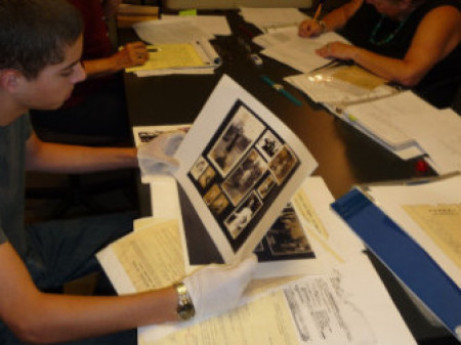
Donate to the Collection
The Holocaust Center gratefully accepts photographs, documents, correspondence, textiles, ceremonial objects, personal testimonies, and oral histories that support our mission.
Request a Research Visit
Research visits can be accommodated upon request from historians, filmmakers, artists, and more.
Video testimonies, teacher resources, and the work of the Holocaust Center for Humanity are licensed under CC BY-NC-ND 4.0. To view a copy of this license, visit https://creativecommons.org/licenses/by-nc-nd/4.0/
This license requires that reusers give credit to the Holocaust Center for Humanity. It allows reusers to copy and distribute the material in any medium or format in unadapted form and for noncommercial purposes only.
Exploring Artifacts
Background:
All of these objects have a local connection to Seattle and the Pacific Northwest – either the survivors or their family members live/lived here. Each artifact tells a different story, experience, perspective of the Holocaust. All of these stories contribute to, or help define the Holocaust.
Instructions:
Explore the objects in the gallery using the guiding questions. Take notes on your findings. If done with a group, discuss your responses together. Then, view and read the artifact summary. Feel free to explore the full artifact write up and the related Survivor Encyclopedia page. Discuss how your thoughts or feelings about the artifact changed after learning more about it. Did the “story” change your initial thinking about your artifact? If so, how?
For full teacher instructions, please visit here.
Holocaust Center Seattle: Local Stories of the Holocaust
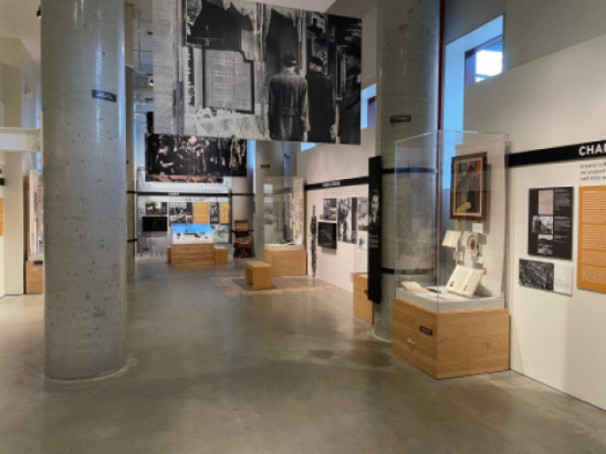
The Holocaust Center for Humanity is a museum, a library, and an educational center that honors the history and lessons of the Holocaust with an emphasis on local stories.
Through educational resources, field trips, special events, and community programs, the Center inspires students of all ages to confront bigotry and indifference, promote human dignity, and take action.
Open every Sunday
10am-4pm
Free First Thursdays
4pm-7pm
To keep our museum accessible to everyone, we do not charge a fixed admission price. These are our recommended admission prices for visitors. Your support helps keep our museum open to everyone.
Adults: $10
Students and Seniors: $5
Free every first Thursday!
Reserved tickets are recommended, and walk-ins are welcome. Tickets are free to reserve.