Marian Nachman
1938-
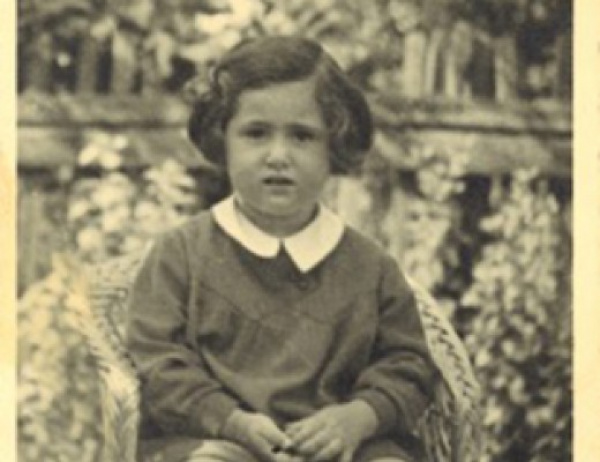
Marian Nachman was born Marianne Mina Neuhaus on May 8, 1938, in s’Hertogenbosch, Netherlands. Her parents, Martha Davids and Arthur Neuhaus, had each immigrated from Germany to the Netherlands in the early 1930s, seeking economic opportunities. They married in 1936, and two years later, they had Marian. Marian’s father worked in the women’s sportswear industry, supporting the young family. However, their lives drastically changed when Nazi Germany invaded the Netherlands in May 1940.
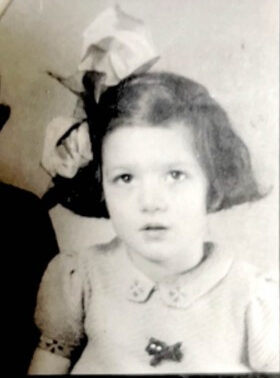
By the summer of 1942, the deportation of Jews from the Netherlands had begun. When Marian was just four years old, her parents went into hiding. Knowing it was too dangerous to keep a young child with them, they made the painful decision to send her away. Marian was first placed with her father’s business associate, the Brunings, in Geldrop, Netherlands. The Brunings had twelve children and assumed that no one would notice an additional child. Unfortunately, one of their children mentioned to her kindergarten class that a Jewish girl was living in their home. This revelation endangered Marian and meant she had to be relocated once more.
Marian was taken in by the Martens family in the town of Horst, in the province of Limburg. There, she became “Marianne Martens” and lived as their daughter until she was eight. Christine and Albert Martens had two sons, Ton and Jan, who quickly became her “brothers” during the war. The Martens raised Marian as a Catholic, even enrolling her to a convent school. She remembers how excited she was to prepare for her First Communion, only to be devastated when she was told she could not participate because she was Jewish.
Hiding her Jewish identity was necessary for Marian’s safety. A German officer and soldiers occupied part of their home. Any slip-up or discovery could put all of them in serious danger. Tragically, Marian’s biological parents were discovered and deported to Sobibor in 1942, where they were murdered. By living as “Marianne Martens,” young Marian was protected, surrounded by a family who loved her dearly.
In 1945, Marian’s life was about to change again. Her uncle Kurt, one of her father’s four brothers, was serving in the American army. He received special permission to leave and locate his niece. When he arrived at the Martens’ home, he told Marian that an aunt and uncle in the U.S. wanted her to live with them. For seven-year-old Marian, the Martens were the only family she had ever known.
On July 10, 1946, Marian flew alone to New York to live with her uncle Fritz Neuhaus and his wife, Ellen, who had left Berlin in 1938. The transition was difficult. Marian didn’t speak English or German. Struggling to communicate and removed from the only family she’d known, Marian felt isolated and abandoned. Over time, she learned English at school and German at home. Marian went on to study French at Smith College and later became an English as a Second Language teacher. She had two children and now lives near them in Washington.
Although Fritz and Ellen formally adopted her, Marian has remained close to the Martens family throughout her life. She visited them while studying abroad in France in 1958-59, welcomed them to the U.S. in 1972, and celebrated Christine’s ninetieth birthday with them in 1996. Over the years, Marian has come to understand how much the Martenses had loved her and even planned to adopt her.
Video Testimony – Marian Nachman
Child of Four Families
The Martens’ Family
The Neuhaus’ Family
My First Communion
Oral History (2017)
Photo Gallery – Marian Nachman

M. Nachman Gallery 1
Marian and her father, Arthur Neuhaus, in s'Hertogenbosch, Holland. 1941.

M. Nachman Gallery 2
Marian and her "brothers," Ton and Jan Martens, 1942.

M. Nachman Gallery 3
Marian dressed for her First Communion, with Jan Martens, in Horst, Holland. 1945.

M. Nachman Gallery 4
Marian and Martens' children in 1946.
M. Nachman Gallery 5
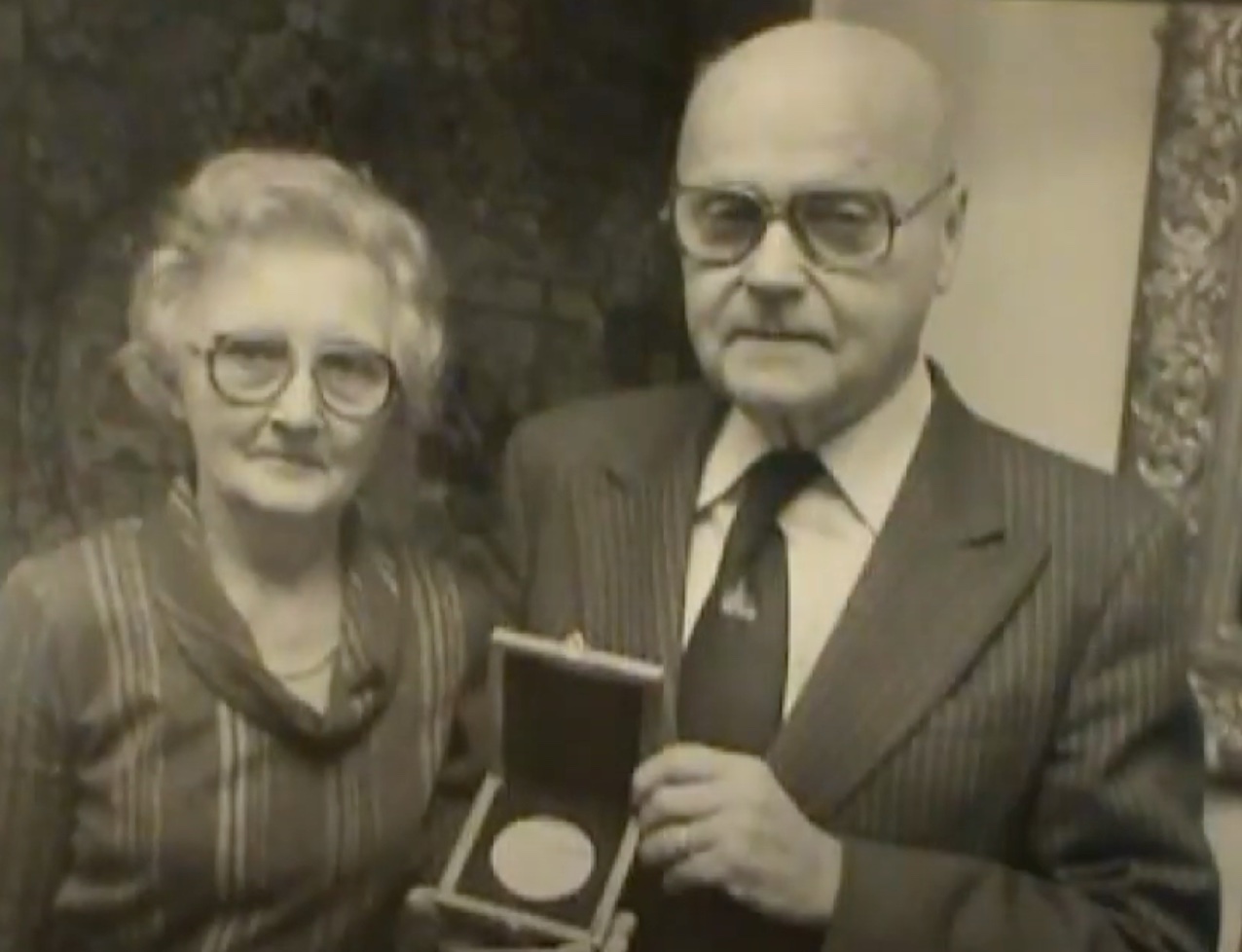
Christine and Albert Martens with their Righteous Among Nations medal, Israel.

M. Nachman Gallery 6
Albert and Christine Martens, date unknown.

M. Nachman Gallery 7
Marian at the wedding of her daughter, Juliet. Spokane, WA, 2001.

M. Nachman Gallery 8
Marian. August 1, 2012.
M. Nachman Gallery 9
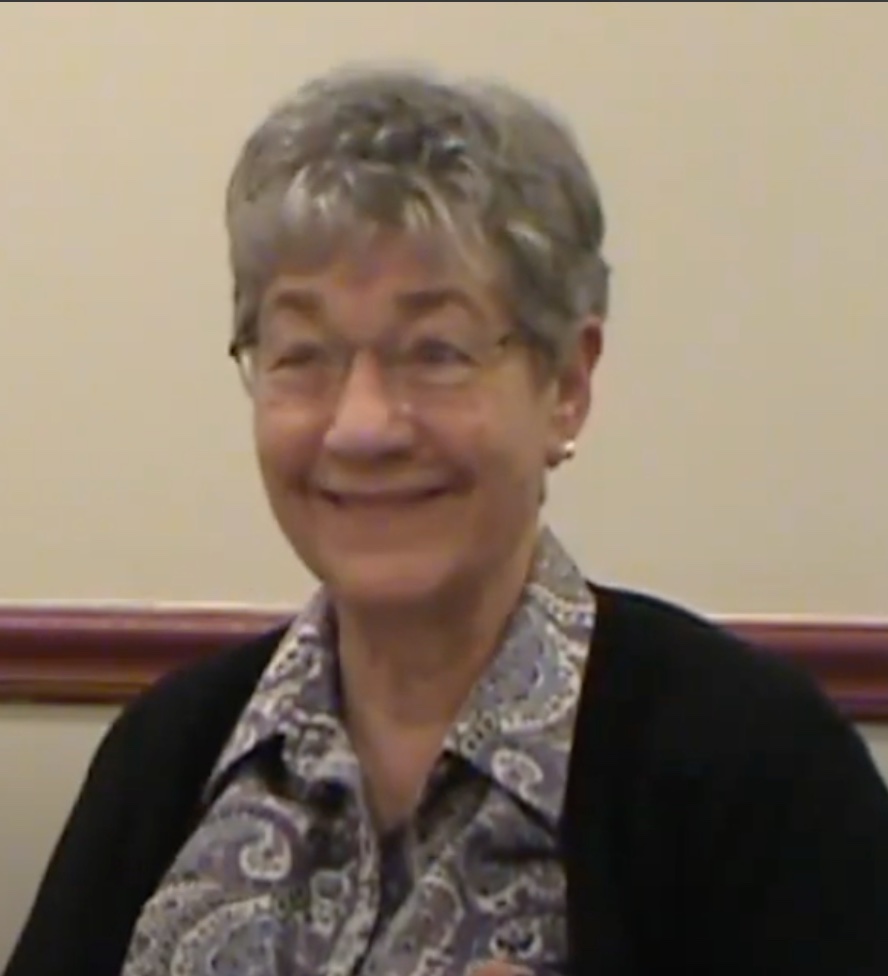
Marian interviewed by the Jewish Historical Society of Fairfield County, 2017.